WZ Cas (Változócsillag) 
|
|
Egyéb elnevezés: WZ Cassiopeiae
|
|
Rektaszcenzió: 0h 1m
|
Deklináció: 60° 21'
|
|
Csillagkép: Cassiopeia
|
|
Dátum/idő: 2008.01.21 19:00 UT
|
|
Műszer: 300/1500 Newton
|
|
Látómező: 6'
|
Nagyítás és szűrő(k): 167x
|
|
Nyugodtság: 5/10
|
Átlátszóság: 3/5
|
|
Helyszín: Nádasdladány, Magyarország
|
|
Észlelő: Ferenc Lovró
|
Leírás:
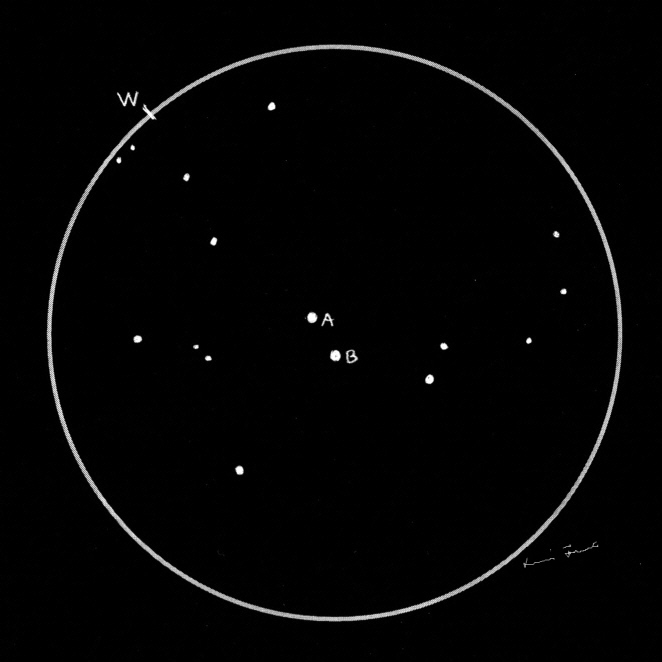
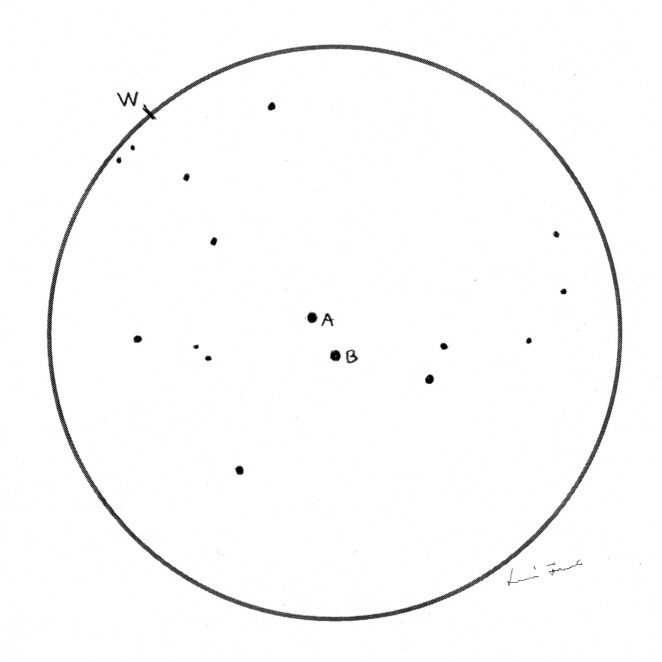
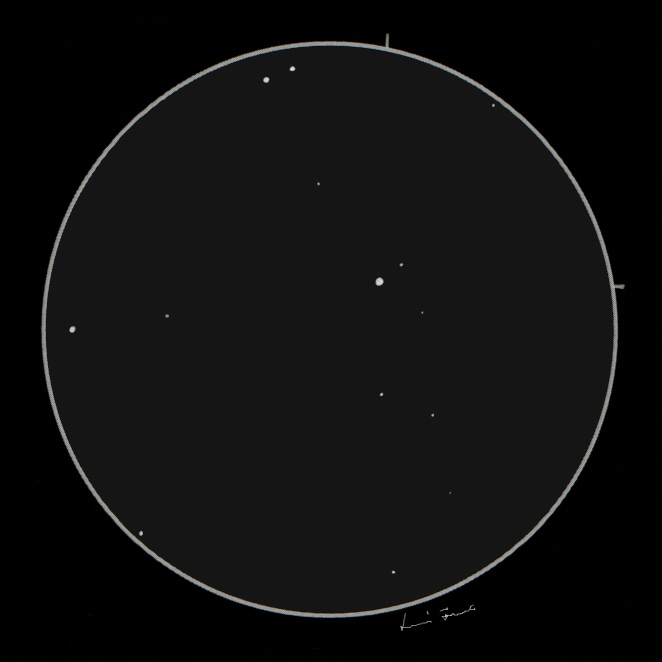
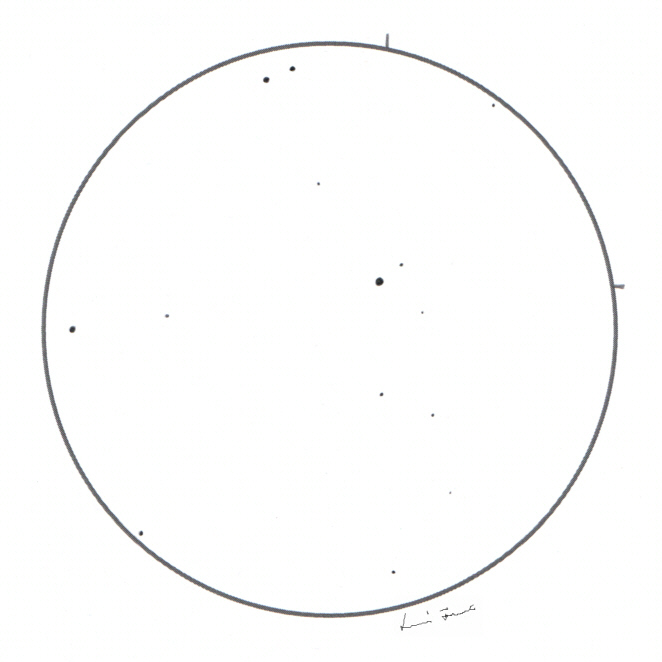
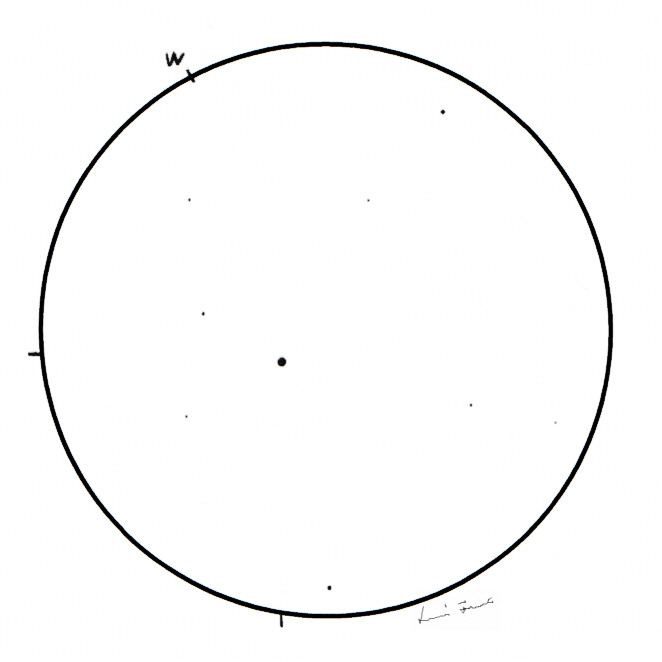
Valószínűleg ez a legcsodásabb narancsszínű csillag, amit valaha láttam. A fényes ß Cas közelében található, A B komponens színindexe 0.03, míg a főcsillagé 3.12, ami egy rettentő vörös színt takar. A WZ Cas egy vörös óriás, ami egyben változócsillag is. A színe főképp 100x alatti nagyítással jön elő.
|
|
Nagyfelbontású képek: [ inverz rajz | eredeti rajz ]
|
WZ Cas (Variable star) 
|
|
Also known as: WZ Cassiopeiae
|
|
Right ascension: 0h 1m
|
Declination: 60° 21'
|
|
Constellation: Cassiopeia
|
|
Date/time: 2008.01.21 19:00 UT
|
|
Equipment: 12" f/5 Newtonian
|
|
FoV: 6'
|
Magnification and filter(s): 167x
|
|
Seeing: 5/10
|
Transparency: 3/5
|
|
Location: Nádasdladány, Hungary
|
|
Observer: Ferenc Lovró
|
Description:
Probably this is the most beautiful orange-coloured star I've ever seen. Located nearby the bright ß Cas, the star B of this binary has a colour index of 0.03 while star A has 3.12 which means that this is an extremely red star. The WZ Cas is a red giant star that is also a variable. Its colour can be best seen in magnifications under 100x.
|
|
Hi-resolution image: [ reversed sketch | original sketch ]
|
|
|
Szaturnusz (Bolygó)
|
|
Rektaszcenzió: h m
|
Deklináció: ° '
|
|
Csillagkép: Andromeda
|
|
Dátum/idő: 2008.02.19 21:00 UT
|
|
Műszer: 300/1500 Newton
|
|
Látómező: 17'
|
Nagyítás és szűrő(k): 167x
|
|
Nyugodtság: 7/10
|
Átlátszóság: 4/5
|
|
Helyszín: Nádasdladány, Magyarország
|
|
Észlelő: Ferenc Lovró
|
Leírás:
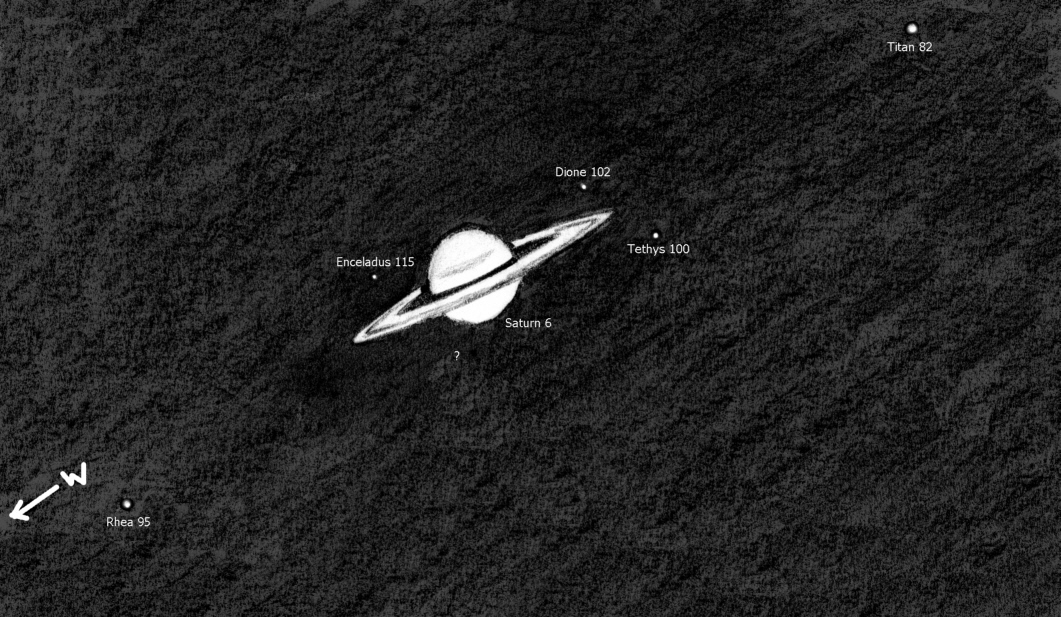
Ez egy közelebbi észlelése a bolygónak (a Iapetus holdja nem is fért rá a rajzra). Kérdőjellel egy feltételezett hetedik holdat is jelöltem, bár ez csak pillanatokra tűnt fel elfordított látással, de határozottan és mindig ugyanott.
|
|
Nagyfelbontású képek: [ inverz rajz | eredeti rajz ]
|
|
Saturn (Planet)
|
|
Right ascension: h m
|
Declination: ° '
|
|
Constellation: Andromeda
|
|
Date/time: 2008.02.19 21:00 UT
|
|
Equipment: 12" f/5 Newtonian
|
|
FoV: 17'
|
Magnification and filter(s): 167x
|
|
Seeing: 7/10
|
Transparency: 4/5
|
|
Location: Nádasdladány, Hungary
|
|
Observer: Ferenc Lovró
|
Description:
A closer look (Iapetus cannot fit on this sketch). I've marked a possible seventh moon with a questionmark. But I've seen it only for a moment with averted vision.
|
|
Hi-resolution image: [ reversed sketch | original sketch ]
|
|
|
Szaturnusz (Bolygó)
|
|
Rektaszcenzió: h m
|
Deklináció: ° '
|
|
Csillagkép: Andromeda
|
|
Dátum/idő: 2008.02.19 21:00 UT
|
|
Műszer: 300/1500 Newton
|
|
Látómező: 17'
|
Nagyítás és szűrő(k): 167x
|
|
Nyugodtság: 7/10
|
Átlátszóság: 4/5
|
|
Helyszín: Nádasdladány, Magyarország
|
|
Észlelő: Ferenc Lovró
|
Leírás:
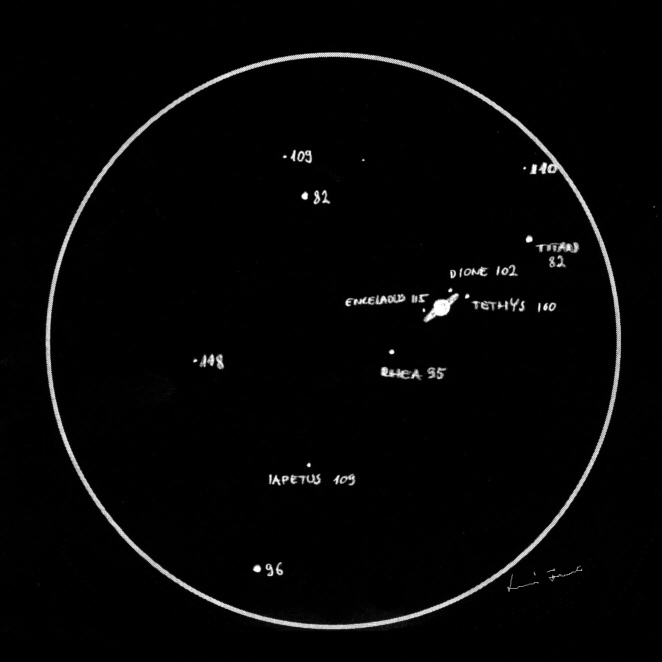
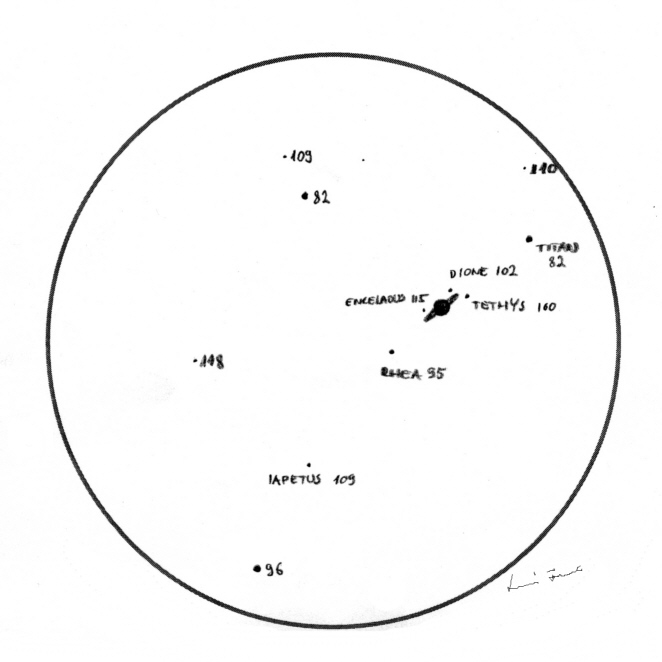
Áttekintő észlelés a Szaturnuszról és hat (!) holdjáról, a 97%-os fázisú Hold közelében. HHihetetlen! A holdak listája balról jobbra:
Iapetus (10.9m)
Rhea (9.5m)
Enceladus (11.5m)
Dione (10.2m)
Tethys (10.0m)
Titan (8.2m)
|
|
Nagyfelbontású képek: [ inverz rajz | eredeti rajz ]
|
|
Saturn (Planet)
|
|
Right ascension: h m
|
Declination: ° '
|
|
Constellation: Andromeda
|
|
Date/time: 2008.02.19 21:00 UT
|
|
Equipment: 12" f/5 Newtonian
|
|
FoV: 17'
|
Magnification and filter(s): 167x
|
|
Seeing: 7/10
|
Transparency: 4/5
|
|
Location: Nádasdladány, Hungary
|
|
Observer: Ferenc Lovró
|
Description:
Overview of Saturn and 6 (!) of its moons near the 97% Moon. Unbelievable! The moons from left to right are:
Iapetus (10.9m)
Rhea (9.5m)
Enceladus (11.5m)
Dione (10.2m)
Tethys (10.0m)
Titan (8.2m)
|
|
Hi-resolution image: [ reversed sketch | original sketch ]
|
|
|
Epsilon Lyrae (Kettőscsillag)
|
|
Egyéb elnevezés:
|
|
Rektaszcenzió: 18h 44m
|
Deklináció: 39° 40'
|
|
Csillagkép: Lyra
|
|
Dátum/idő: 2008.06.10 22:00 UT
|
|
Műszer: 300/1500 Newton
|
|
Látómező: 9'
|
Nagyítás és szűrő(k): 250x
|
|
Nyugodtság: 7/10
|
Átlátszóság: 4/5
|
|
Helyszín: Nádasdladány, Magyarország
|
|
Észlelő: Ferenc Lovró
|
Leírás:
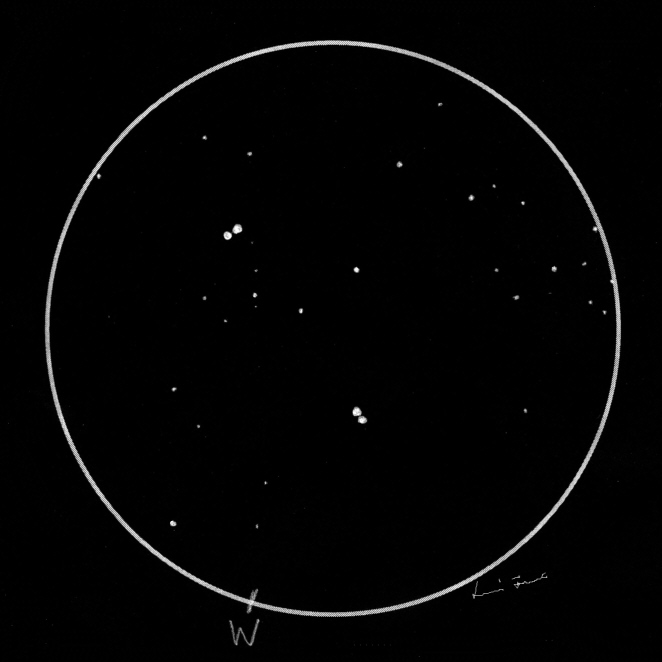
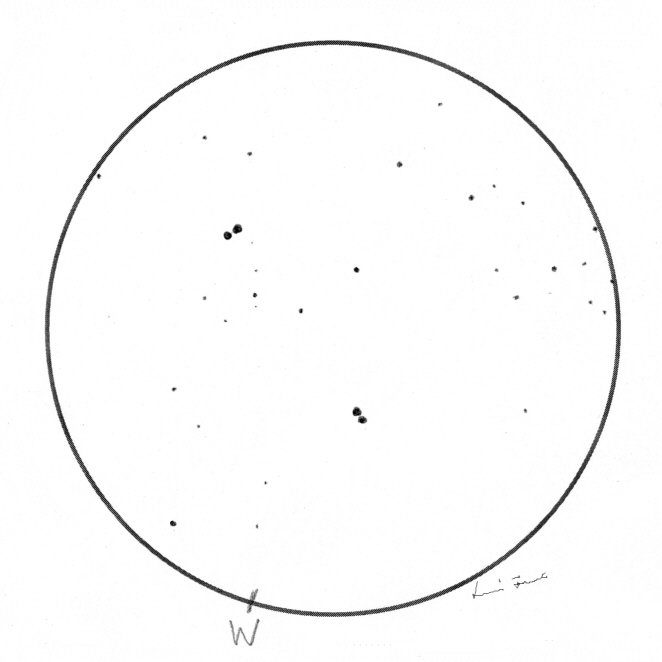
Feltehetőleg a leggyakrabban észlelt több tagból álló csillagrendszer, könnyű helyen található a Vega közelében. Már binokulárral is két csillagra bomlik - sőt, nyugodtabb éjszakán szabad szemmel is kettős -, de az igazi varázslat nagyobb távcsövekkel, jó körülmények között történik: a kettős mindkét tagja valójában önmagában is kettős! 71x nem bomlott négy csillagra, de 167x és 25x nagyításon sikerrel jártam. Nagyon látványos objektum, mindenképp megéri vetni rá egy pillantást!
|
|
Nagyfelbontású képek: [ inverz rajz | eredeti rajz ]
|
|
Epsilon Lyrae (Binary star)
|
|
Also known as: Double double
|
|
Right ascension: 18h 44m
|
Declination: 39° 40'
|
|
Constellation: Lyra
|
|
Date/time: 2008.06.10 22:00 UT
|
|
Equipment: 12" f/5 Newtonian
|
|
FoV: 9'
|
Magnification and filter(s): 250x
|
|
Seeing: 7/10
|
Transparency: 4/5
|
|
Location: Nádasdladány, Hungary
|
|
Observer: Ferenc Lovró
|
Description:
Probably the most observed multiple star system, located in an easy position in Lyra near the bright star Vega. The double can be split even with better binoculars, however the real magic happens with larger telescopes as under good conditions, they will split the double into a "double double"! At 71x I was unable to split the pairs, however at 167x and 250x I had success. A very spectacular object, worth giving a try!
|
|
Hi-resolution image: [ reversed sketch | original sketch ]
|
|
|
NGC 1662 meteor (Various/other)
|
|
Right ascension: 4h 49m
|
Declination: 10° 58'
|
|
Constellation: Orion
|
|
Date/time: 2009.11.24 00:18 UT
|
|
Equipment: 12" f/5 Newtonian
|
|
FoV: 30'
|
Magnification and filter(s): 100x
|
|
Seeing: 7/10
|
Transparency: 3/5
|
|
Location: Nádasdladány, Hungary
|
|
Observer: Ferenc Lovró
|
Description:
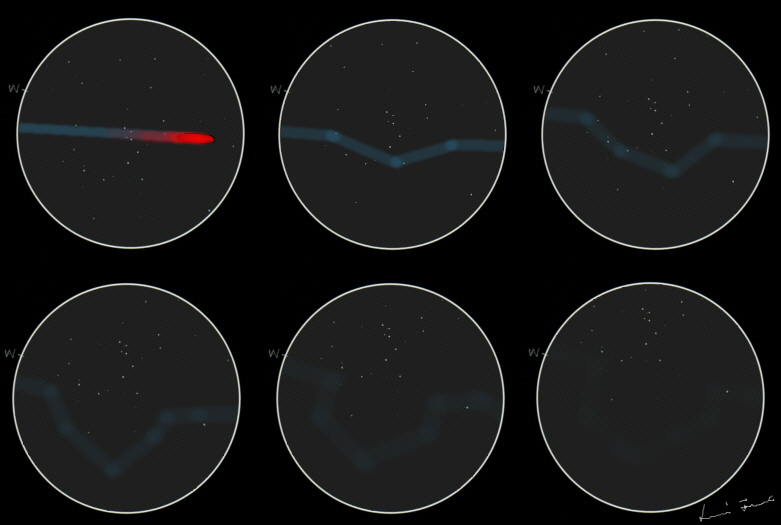
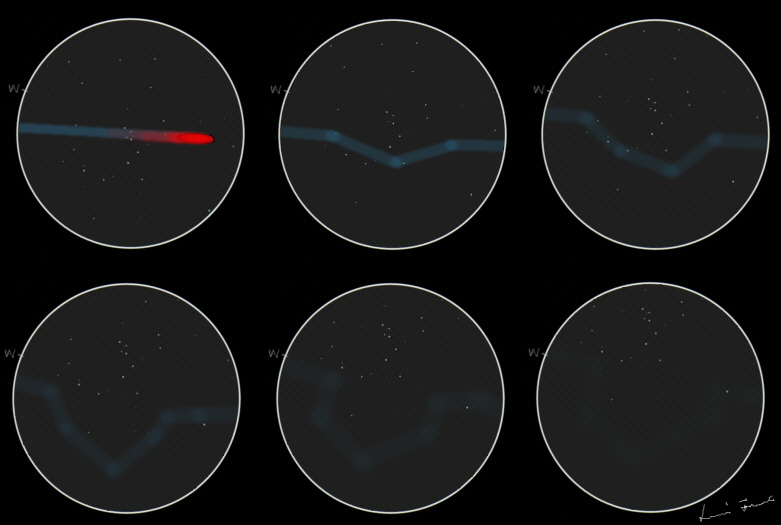
I was sketching the marvelous open cluster of NGC 1662 at 100x and just after I finished and took a final look, at 00:18 UT suddenly a fiery meteor rushed through the FoV, leaving a bluish ionized tail behind. This was visible for about 10 seconds before it disappeared forever. The series of sketches I've rendered digitally after quick drafts made at the eyepiece, using my actual NGC 1662 sketch as a background. As you can see, the tail was quickly moving to the North (thanks to the Dobsonian mount I was able to react and follow very quickly). While it constantly lost its brightness, it became wider and wider, and the most interesting phenomenon was the change of its shape: it got 'broken' at several points. Between each of these points, the tail remained straight. The joints were visibly brighter than the straight parts, just like on the sketch. I wonder if this is the regular behaviour of ionized tails of meteors, but this is what I saw. Anyhow, it was most probably the greatest 10 seconds of my observing life.
|
|
Hi-resolution image: [ reversed sketch | original sketch ]
|
|
|
Copernicus crater (Our Moon)
|
|
Also known as: Copernicus + Fauth + Gay-Lussac
|
|
Right ascension: h m
|
Declination: ° '
|
|
Constellation:
|
|
Date/time: 2009.12.26 17:15 UT
|
|
Equipment: 12" f/5 Newtonian
|
|
FoV: '
|
Magnification and filter(s): 250x + 30% neutral filter(s)
|
|
Seeing: 4/10
|
Transparency: 1/5
|
|
Location: Nádasdladány, Hungary
|
|
Observer: Ferenc Lovró
|
Description:
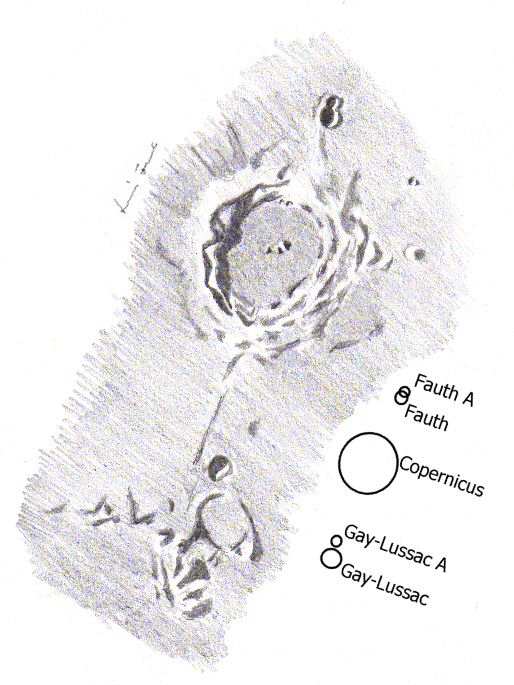
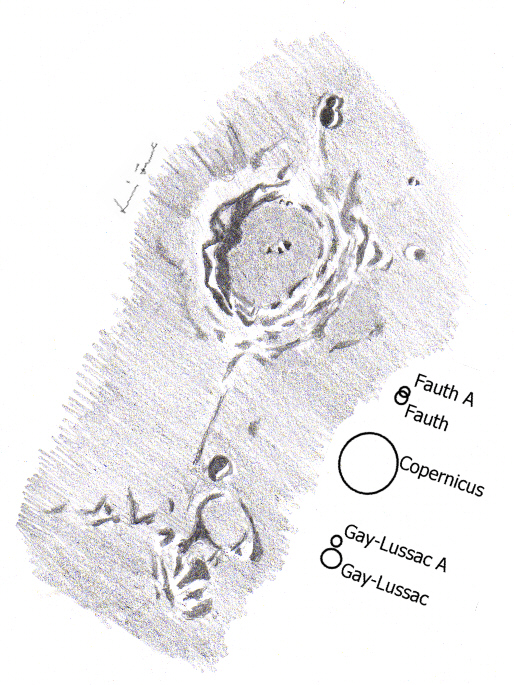
This is my first ever Moon-sketch, displaying craters Copernicus, Fauth and Gay-Lussac with some other sub-craters and domes not noted on the sketch. This is my actual sketch done at the eyepiece, no alterations were made after manually or digitally, other than resizing. It took about 45 minutes to finish, and I'm quite satisfied with it, althouth I've found that sketching the Moon is indeed very hard and very different from sketching deep space objects. Perhaps I should not finish Lunar sketches at the eyepiece but create only drafts with different markings for different shades and create the actual sketch in the warmth of the room. As an additional difficulty, the sky was 100% covered with a thin layer of cloud which made the image to be in constant change, only 1 or 2 stars was visible here and then. Moon phase was about 69%.
|
|
Hi-resolution image: [ reversed sketch | original sketch ]
|
|
|
Prinz crater + Montes Harbinger (Our Moon)
|
|
Also known as: Prinz, Krieger C, Vera, Angström, Montes Harbinger, Rimae Prinz
|
|
Right ascension: h m
|
Declination: ° '
|
|
Constellation:
|
|
Date/time: 2010.03.26 20:00 UT
|
|
Equipment: 12" f/5 Newtonian
|
|
FoV: '
|
Magnification and filter(s): 300x + 15% neutral filter(s)
|
|
Seeing: 2/10
|
Transparency: 4/5
|
|
Location: Nádasdladány, Hungary
|
|
Observer: Ferenc Lovró
|
Description:
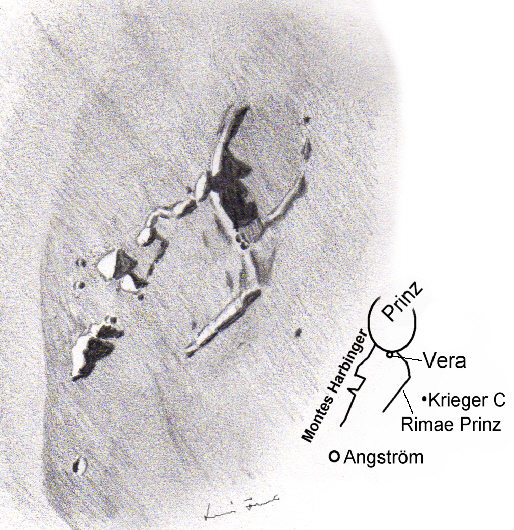
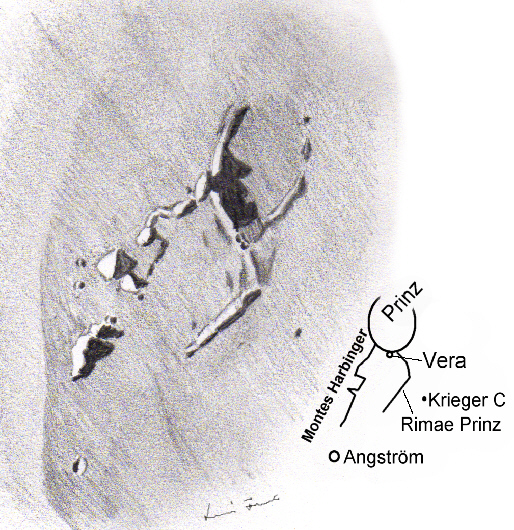
I was just cruising around the terminator of the Moon, testing the new cooling equipment on my OTA, when I found a very interesting mountain chain with some ruined crater at one end, near the crater Aristarchus which was right on the terminator. The view was so spectacular, that I decided to make a sketch. I found out that the large crater was Prinz, and the mountains attached are Montes Harbinger. I've sketched some additional minor craters nearby that have been cropped out from this image. A really unusual view, worth taking a peek when it's near the terminator!
|
|
Hi-resolution image: [ reversed sketch | original sketch ]
|
|
|
Nova Del 2013 (Változócsillag)
|
|
Egyéb elnevezés: Nova Delphinii 2013
|
|
Rektaszcenzió: h m
|
Deklináció: ° '
|
|
Csillagkép: Delphinus
|
|
Dátum/idő: 2013.08.15 22:00 UT
|
|
Műszer: 60x20 spektív
|
|
Látómező: '
|
Nagyítás és szűrő(k): 20x
|
|
Nyugodtság: 4/10
|
Átlátszóság: 3/5
|
|
SQM: 20.00 m/as2
|
Hőmérséklet: 16°C
|
|
Páratartalom: alacsony
|
Szél: nincs
|
|
Látvány: 1 - egyáltalán nem látványos
|
|
Nehézség: 1 - azonnal látható, nem szükséges sötétadaptáció vagy elfordított látás
|
|
Pozíció: 3 - közepes, némi csillagról-csillagra ugrálás szükséges
|
|
Helyszín: Nádasdladány, Magyarország
|
|
Észlelő: Ferenc Lovró
|
Leírás:
Könnyű szabadszemes nóva, kézben tartott spektívvel figyeltem meg, 20x nagyítás mellett.
|
|
Nagyfelbontású képek: [ inverz rajz | eredeti rajz ]
|
|
Nova Del 2013 (Variable star)
|
|
Also known as: Nova Delphinii 2013
|
|
Right ascension: h m
|
Declination: ° '
|
|
Constellation: Delphinus
|
|
Date/time: 2013.08.15 22:00 UT
|
|
Equipment: 60x20 spotting scope
|
|
FoV: '
|
Magnification and filter(s): 20x
|
|
Seeing: 4/10
|
Transparency: 3/5
|
|
SQM: 20.00 m/as2
|
Temperature: 16°C
|
|
Humidity: low
|
Wind: none
|
|
Sight: 1 - nothing spectacular
|
|
Difficulty: 1 - instantly visible, no dark adaptation or averted vision needed
|
|
Position: 3 - moderate, some starhopping needed
|
|
Location: Nádasdladány, Hungary
|
|
Observer: Ferenc Lovró
|
Description:
Easily naked eye nova, observed with a handheld spotting scope at 20x.
|
|
Hi-resolution image: [ reversed sketch | original sketch ]
|
|
|
Mu UMa (TVICS)
|
|
Egyéb elnevezés: Mu Ursae Majoris, Tania Australis
|
|
Rektaszcenzió: 10h 23m
|
Deklináció: 41° 26'
|
|
Csillagkép: Ursa Major
|
|
Dátum/idő: 2014.05.23 21:00 UT
|
|
Műszer: 300/1500 Newton
|
|
Látómező: 12'
|
Nagyítás és szűrő(k): 250x
|
|
Nyugodtság: 7/10
|
Átlátszóság: 3/5
|
|
SQM: 21.14 m/as2
|
Hőmérséklet: 14°C
|
|
Páratartalom: alacsony
|
Szél: nincs
|
|
Látvány: 4 - sok részlet, nagyon érdekes, egyedi kinézet
|
|
Nehézség: 1 - azonnal látható, nem szükséges sötétadaptáció vagy elfordított látás
|
|
Pozíció: 1 - nagyon könnyű, sok fényes csillag a közelben
|
|
Helyszín: Nádasdladány, Magyarország
|
|
Észlelő: Ferenc Lovró
|
Leírás:
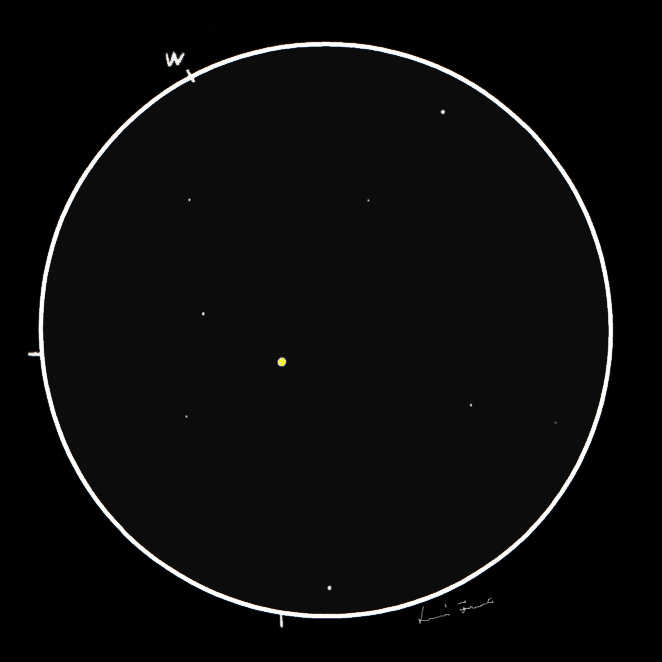
Érdekes, hogy a Mü UMa évek óta itt volt a szemem előtt, és eddig mégsem tűnt fel a fantasztikus színe. Nagyon érdekesen reagál a nagyítások növelésére, ez is bizonyítani látszik teóriámat, miszerint a csillagok szinei sokkal könnyebben láthatóak nem sötétadaptálódott szemekkel: szabadszemmel a csillag narancs színű, 71x nagyításon aranysárga, 250x pedig teljesen fehér. A rajz a csillag 71-szeres nagyítással látható tónusát mutatja!
|
|
Nagyfelbontású képek: [ inverz rajz | eredeti rajz ]
|
|
Mu UMa (TVICS)
|
|
Also known as: Mu Ursae Majoris, Tania Australis
|
|
Right ascension: 10h 23m
|
Declination: 41° 26'
|
|
Constellation: Ursa Major
|
|
Date/time: 2014.05.23 21:00 UT
|
|
Equipment: 12" f/5 Newtonian
|
|
FoV: 12'
|
Magnification and filter(s): 250x
|
|
Seeing: 7/10
|
Transparency: 3/5
|
|
SQM: 21.14 m/as2
|
Temperature: 14°C
|
|
Humidity: low
|
Wind: none
|
|
Sight: 4 - lots of details, very interesting, unique look
|
|
Difficulty: 1 - instantly visible, no dark adaptation or averted vision needed
|
|
Position: 1 - very easy, many bright stars nearby
|
|
Location: Nádasdladány, Hungary
|
|
Observer: Ferenc Lovró
|
Description:
Interesting, but Mu UMa was in front of me all these years, yet I've never noticed its fantastic colour. It responds to changing magnifications in a very interesting way, and this seem to support my theory that you can see stellar colours much easier with a non-dark adapted eye: with naked eye it's orange, at 71x it is golden, and at 250x it's white. The sketch displays the hue at 71x.
|
|
Hi-resolution image: [ reversed sketch | original sketch ]
|
|
|
Full Moon (Our Moon)
|
|
Right ascension: h m
|
Declination: ° '
|
|
Constellation:
|
|
Date/time: 2015.07.31 22:00 UT
|
|
Equipment: 4.5" f/8 Newtonian
|
|
FoV: '
|
Magnification and filter(s): 45x + Polarizing filter set filter(s)
|
|
Seeing: 6/10
|
Transparency: 2/5
|
|
Humidity: high
|
|
Sight: 4 - lots of details, very interesting, unique look
|
|
Difficulty: 1 - instantly visible, no dark adaptation or averted vision needed
|
|
Position: 1 - very easy, many bright stars nearby
|
|
Location: Lipótfa, Zselic, Hungary
|
|
Observer: Ferenc Lovró
|
Description:
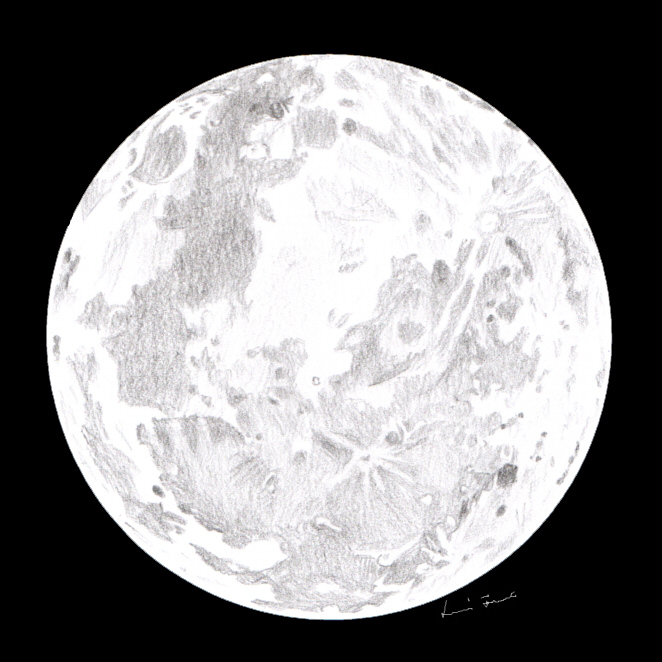
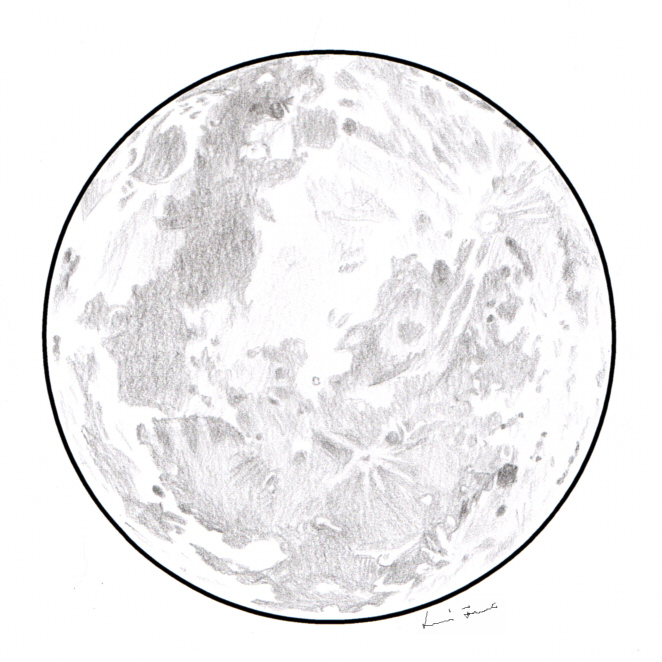
Our Moon at its (nearly) fullest. This observation was made after a rainy day, so the atmosphere was soaking wet, making the Moon lit the whole entire night sky. As this was making virtually any deep-sky observation impossible, I decided to sketch the Moon. It took about an hour or more, and turned out to be an extremely difficult quest. Although there were many tiny details visible in my telescope, it is just impossible to sketch them all with the low resolution that rather small FoV circle of my observation log sheet permits. Small white dots, little domes and mountains, tiny bays... just can't sketch them all.
|
|
Hi-resolution image: [ reversed sketch | original sketch ]
|
| |
|
|
 gmail*com.
 [25]
[25]