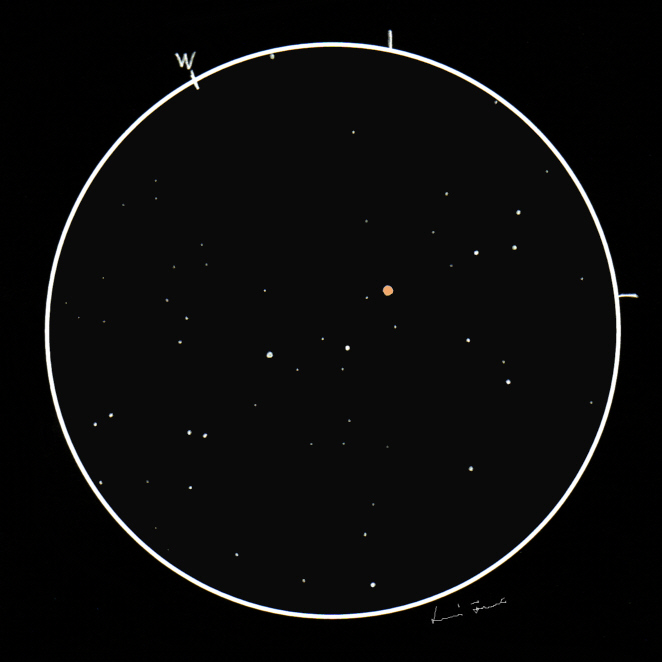
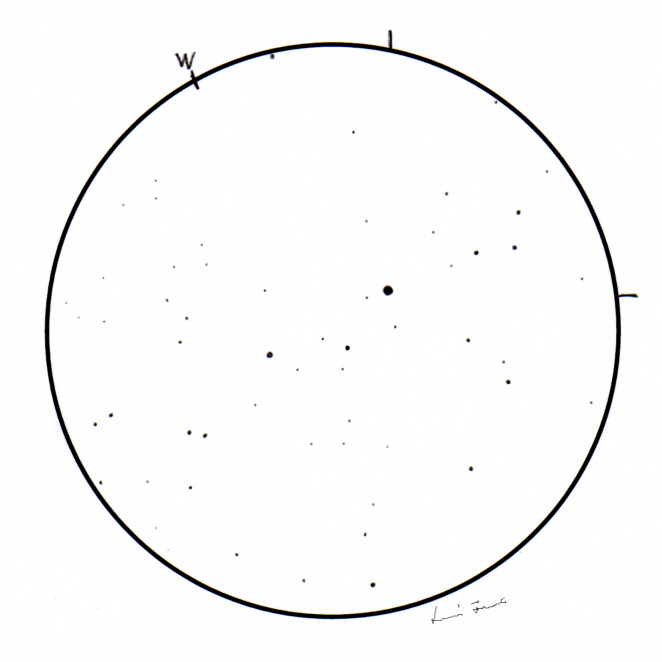
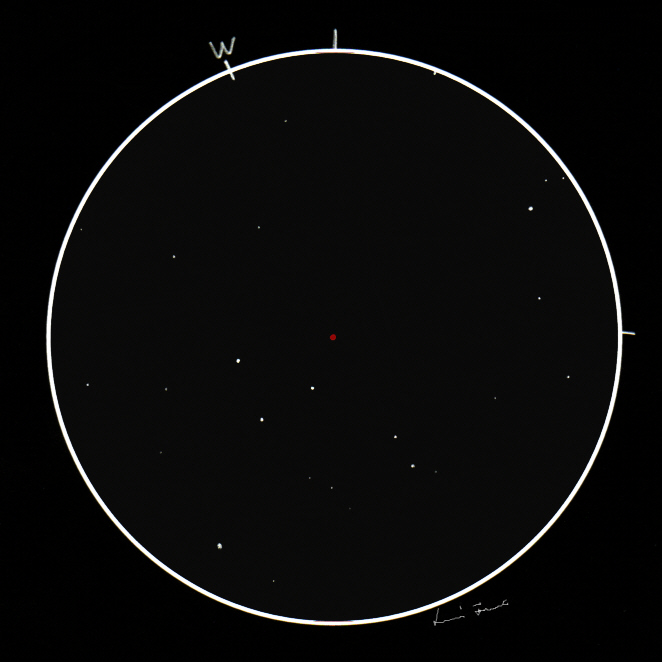
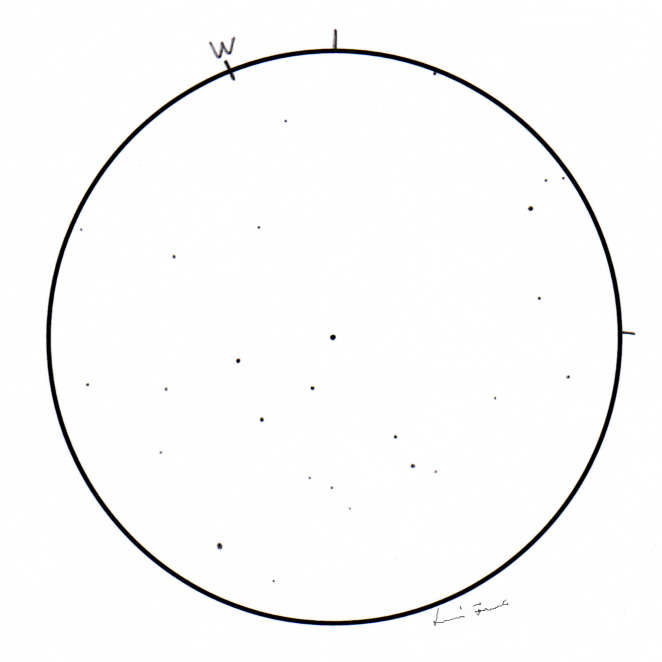
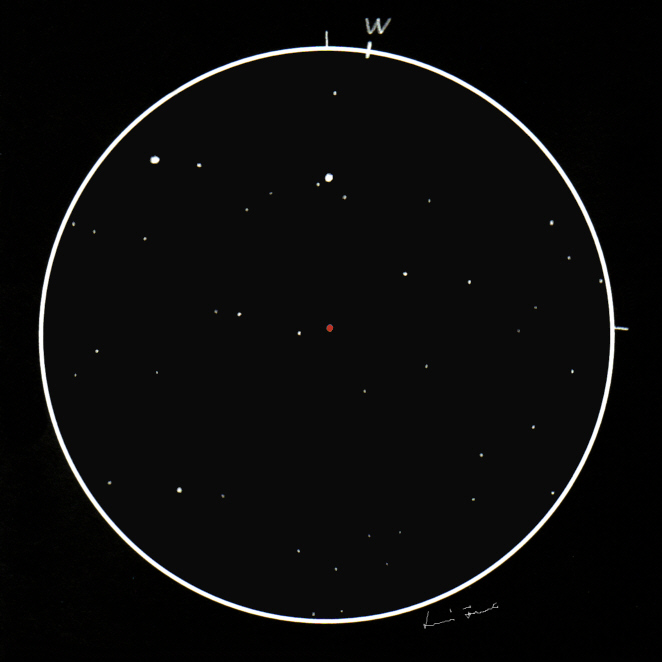
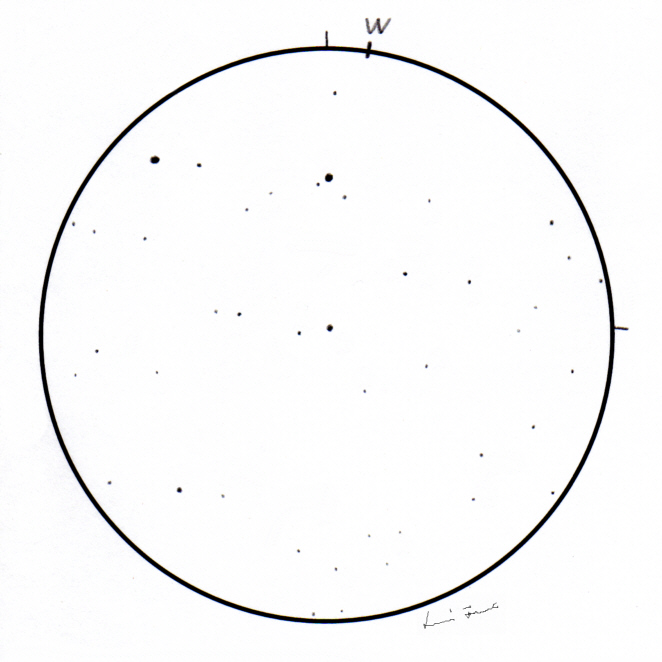
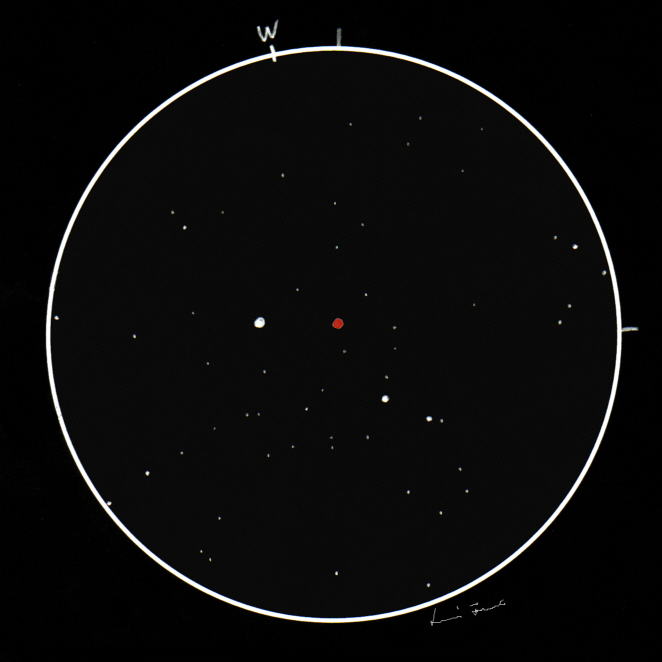
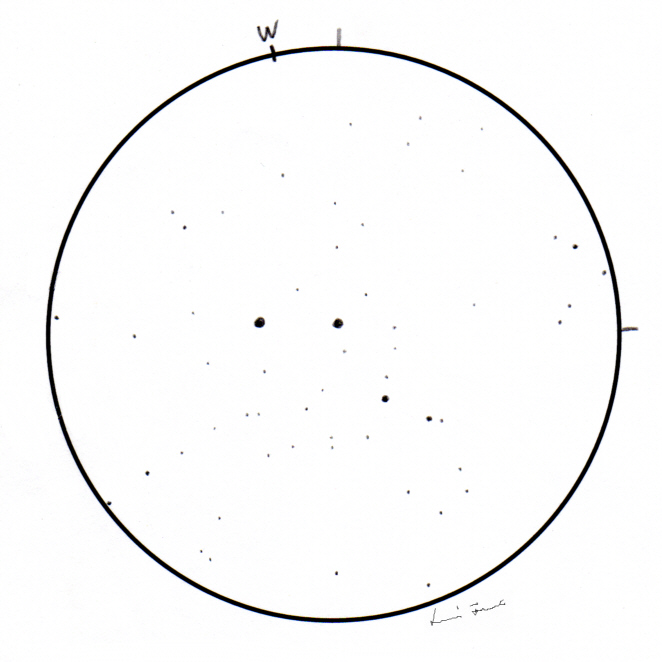
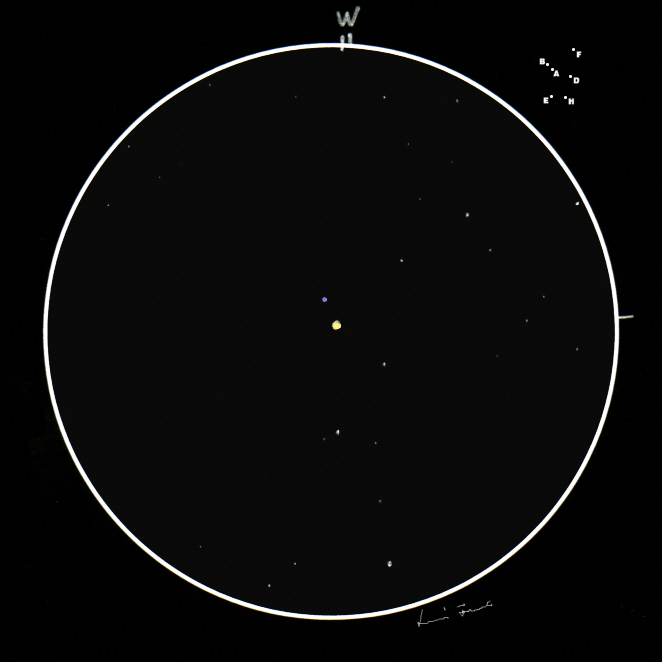
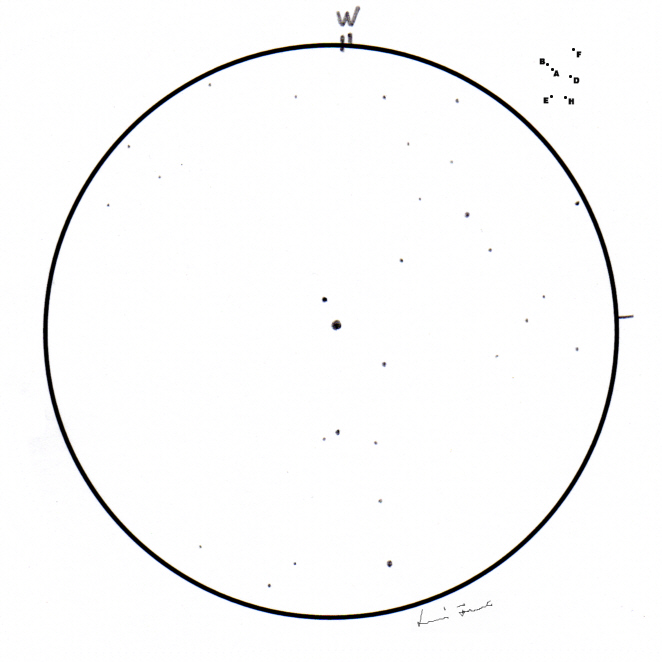
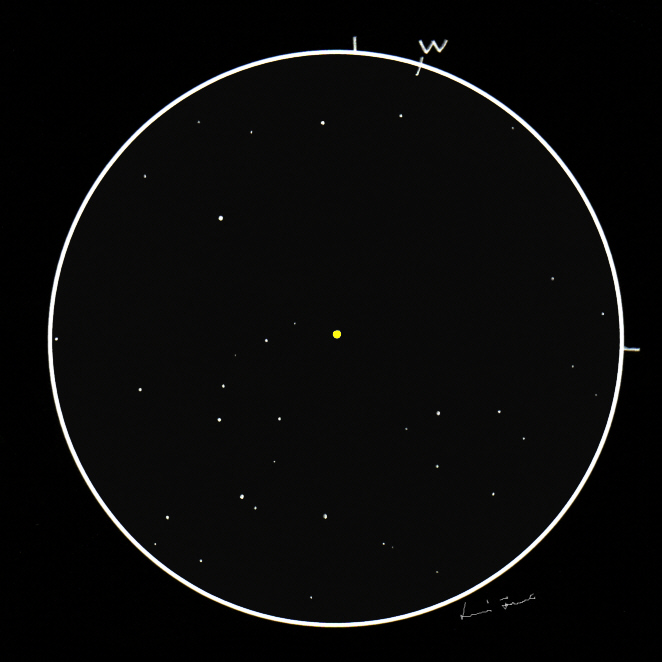
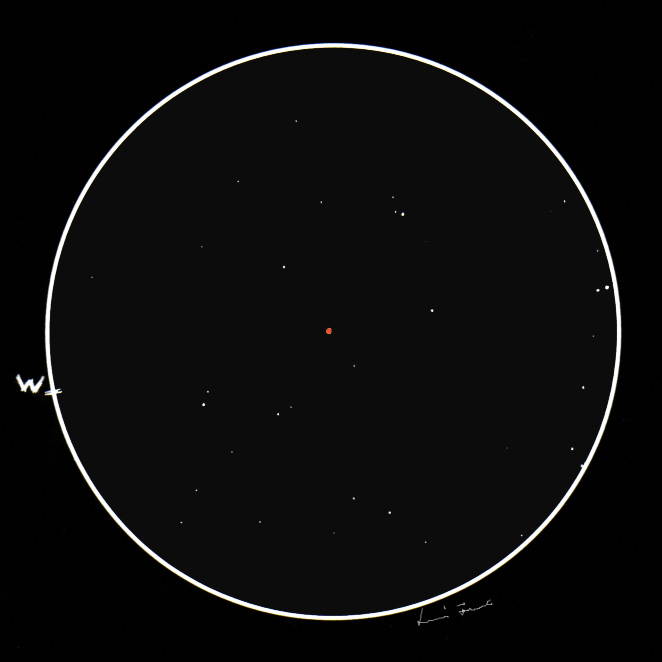
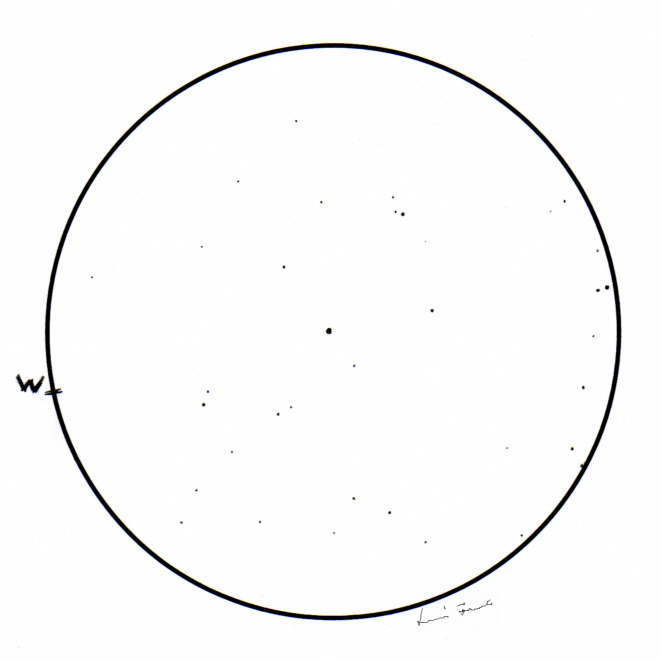
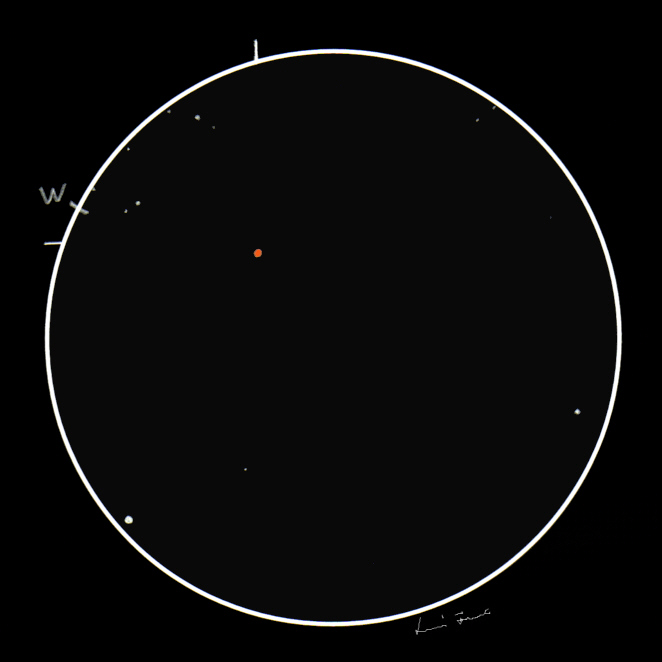
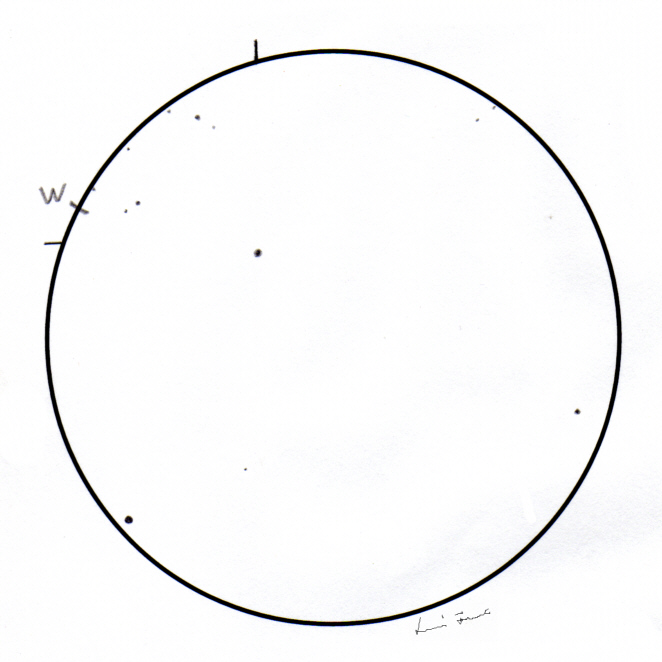
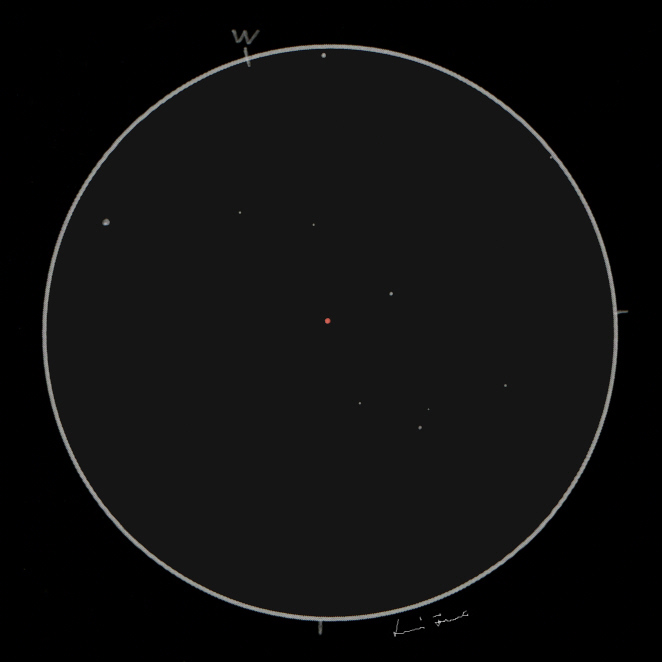
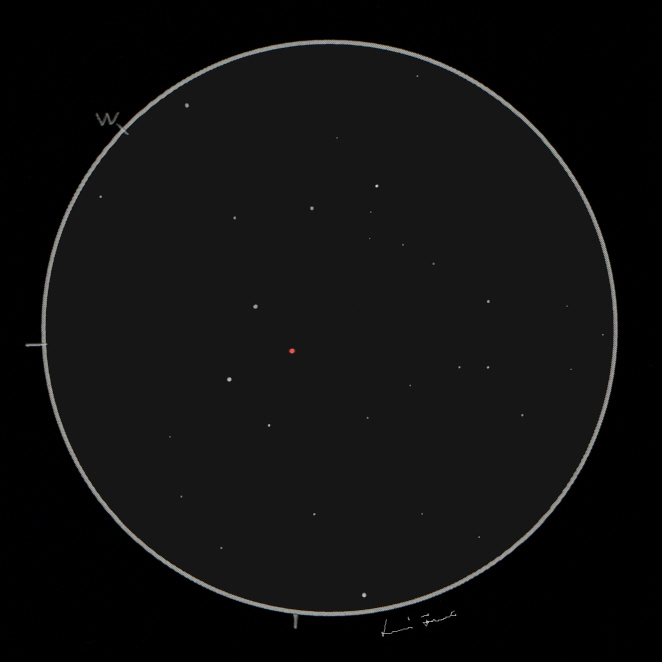
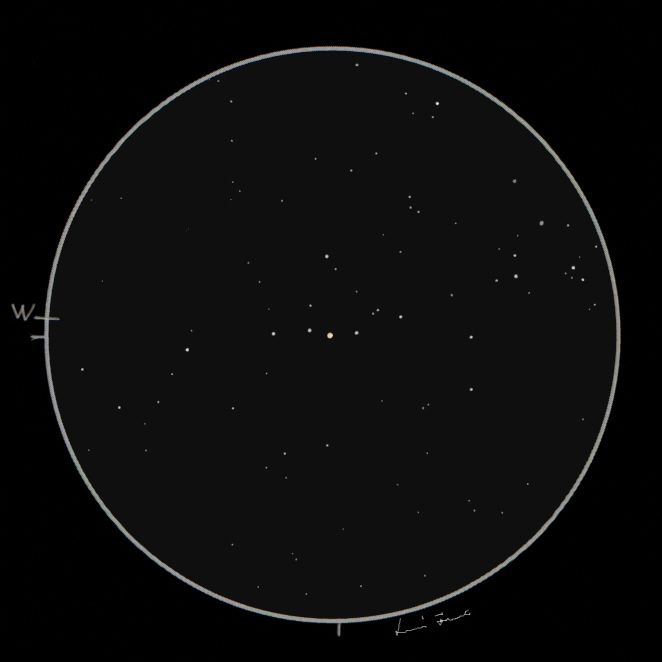
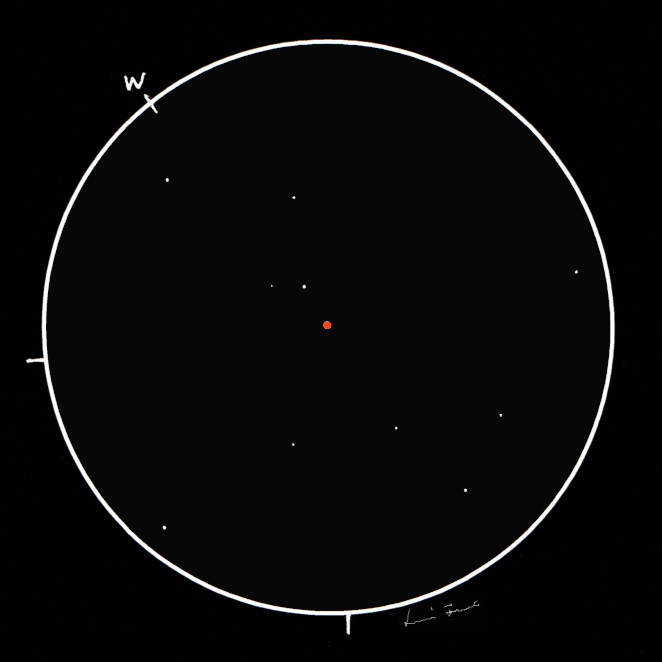
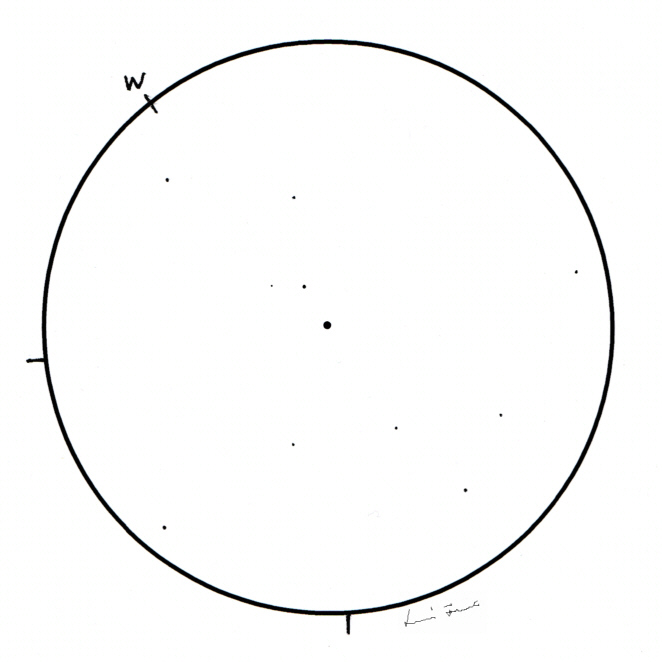
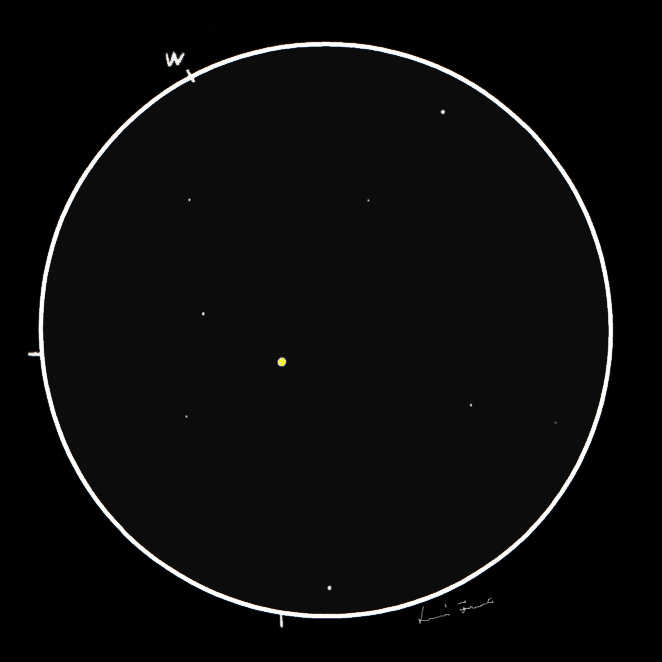
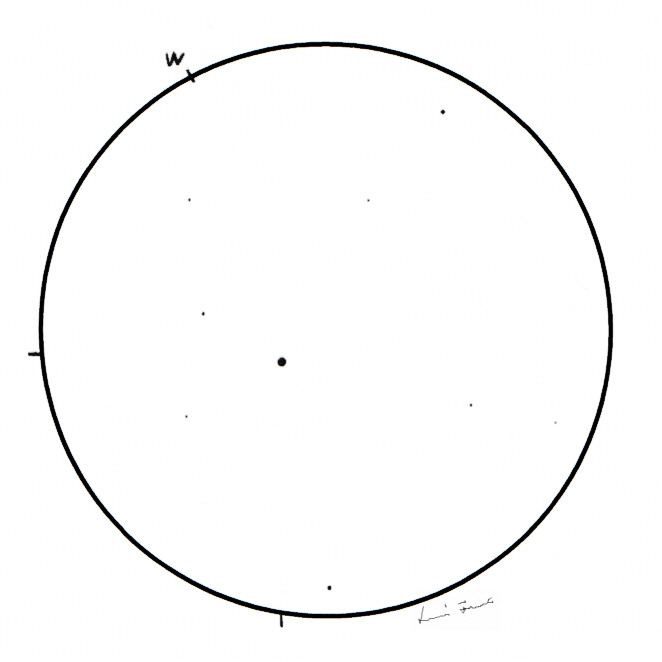
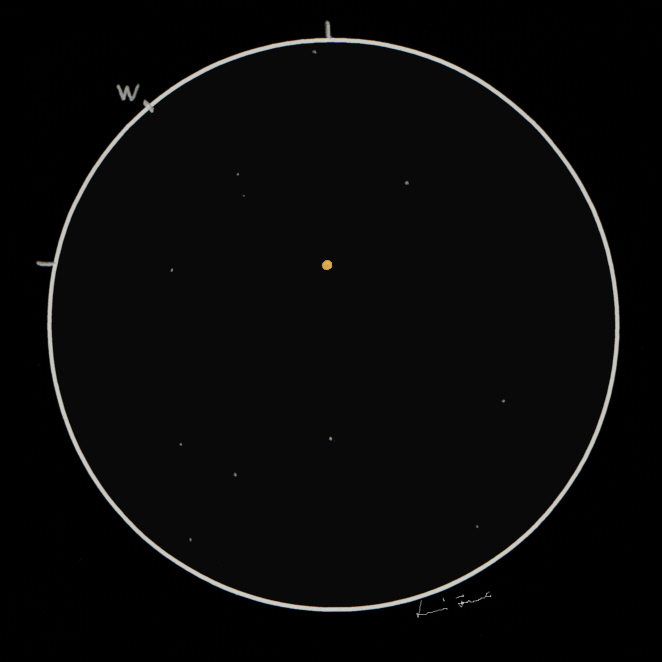
HIP 100155 (TVICS) 
|
|
Rektaszcenzió: 20h 19m
|
Deklináció: 39° 3'
|
|
Csillagkép: Cygnus
|
|
Dátum/idő: 2012.08.14 22:00 UT
|
|
Műszer: 300/1500 Newton
|
|
Látómező: 12'
|
Nagyítás és szűrő(k): 250x
|
|
Nyugodtság: 8/10
|
Átlátszóság: 4/5
|
|
SQM: 21.32 m/as2
|
Hőmérséklet: 8°C
|
|
Páratartalom: száraz
|
Szél: nincs
|
|
Látvány: 4 - sok részlet, nagyon érdekes, egyedi kinézet
|
|
Nehézség: 1 - azonnal látható, nem szükséges sötétadaptáció vagy elfordított látás
|
|
Pozíció: 3 - közepes, némi csillagról-csillagra ugrálás szükséges
|
|
Helyszín: Nádasdladány, Magyarország
|
|
Észlelő: Ferenc Lovró
|
Leírás:
Látványos, fényes csillag, narancs színnel, aminek lehelletnyi vörös tónusa is van. Az RS Cygni változóhoz közel található, egy csillagháromszög déli csúcsát alkotja. Észleléség sötétadaptáció NÉLKÜL javaslom.
|
|
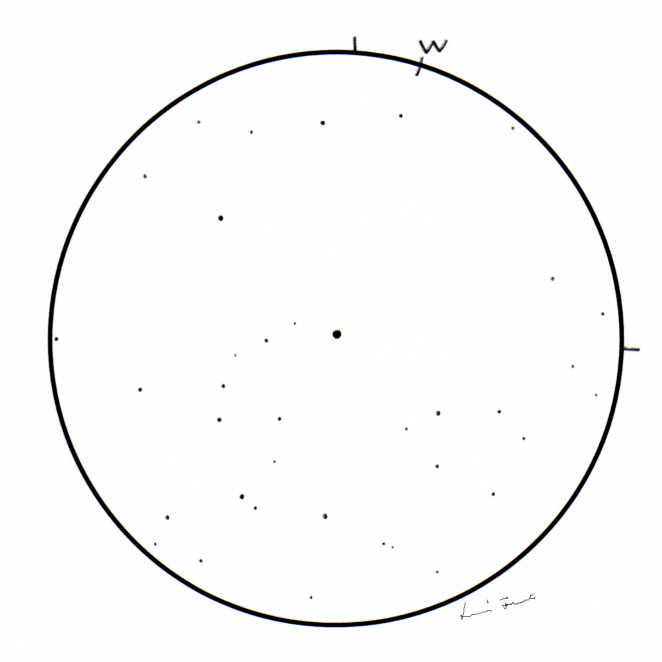
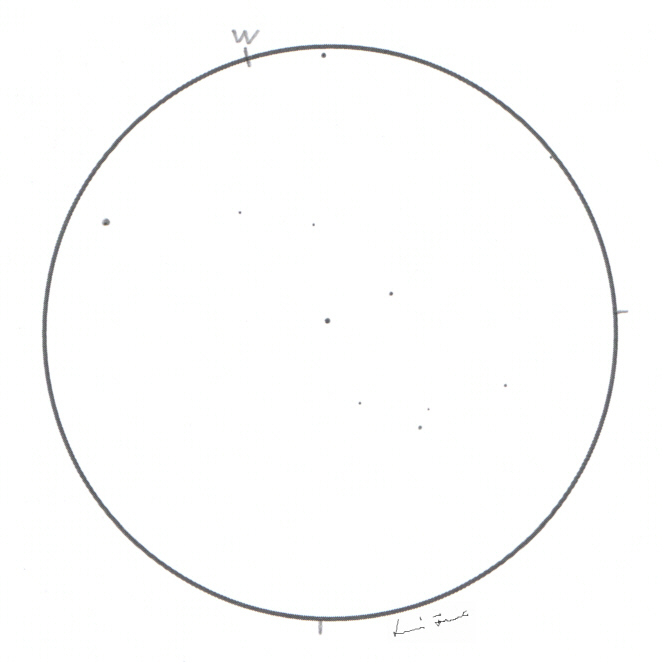
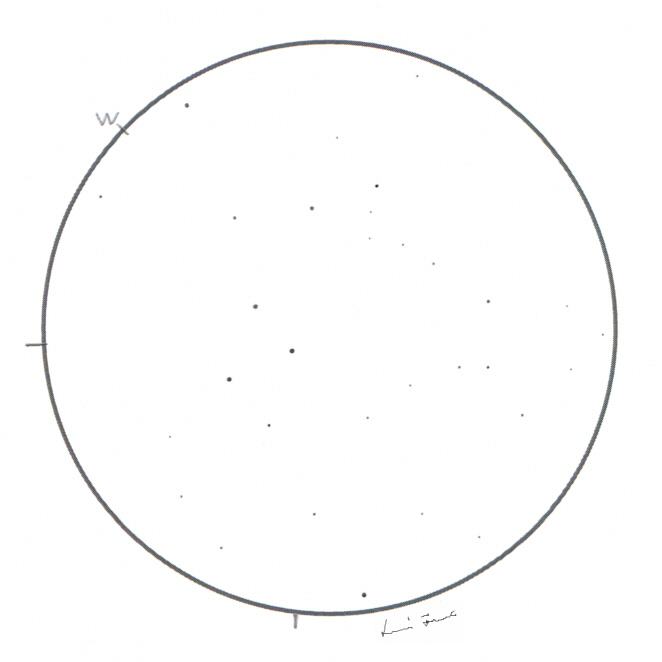
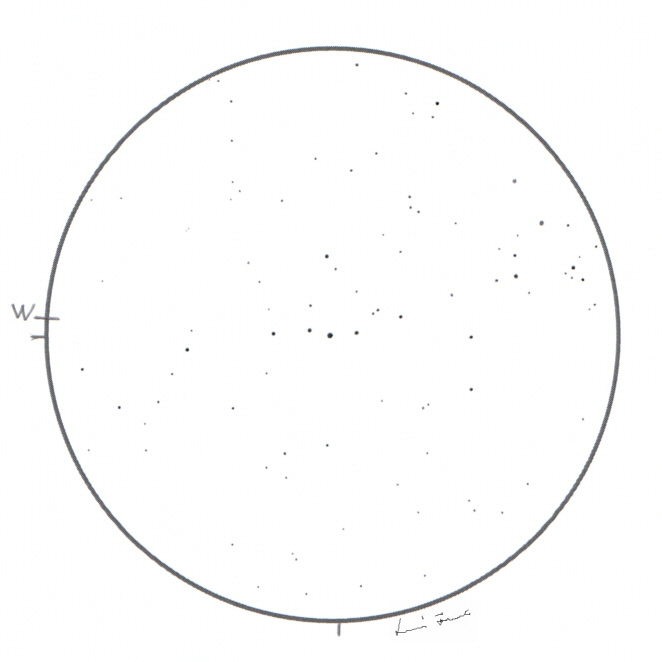
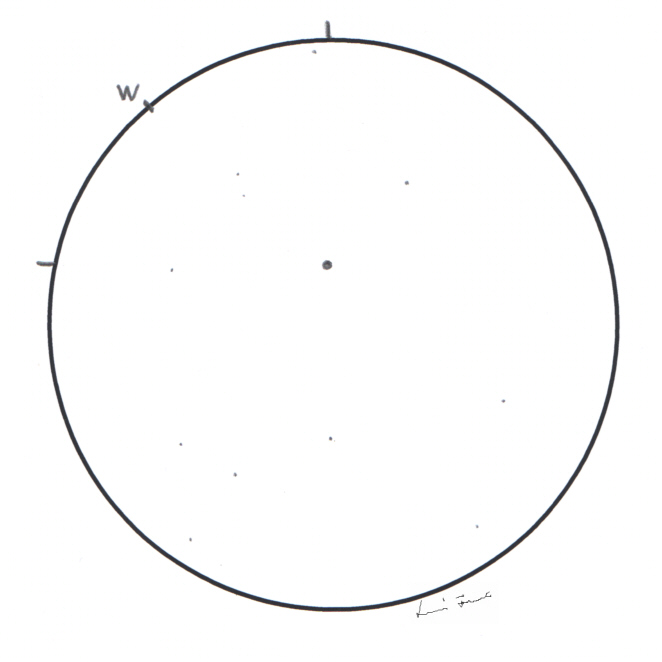
Nagyfelbontású képek: [ inverz rajz | eredeti rajz ]
|
HIP 100155 (TVICS) 
|
|
Right ascension: 20h 19m
|
Declination: 39° 3'
|
|
Constellation: Cygnus
|
|
Date/time: 2012.08.14 22:00 UT
|
|
Equipment: 12" f/5 Newtonian
|
|
FoV: 12'
|
Magnification and filter(s): 250x
|
|
Seeing: 8/10
|
Transparency: 4/5
|
|
SQM: 21.32 m/as2
|
Temperature: 8°C
|
|
Humidity: dry
|
Wind: none
|
|
Sight: 4 - lots of details, very interesting, unique look
|
|
Difficulty: 1 - instantly visible, no dark adaptation or averted vision needed
|
|
Position: 3 - moderate, some starhopping needed
|
|
Location: Nádasdladány, Hungary
|
|
Observer: Ferenc Lovró
|
Description:
Spectacular bright star, that is orange with a hint of red. Located near RS Cygni. It is the Southern apex of a triangle of stars. Should be viewed WITHOUT dark adapted eyes.
|
|
Hi-resolution image: [ reversed sketch | original sketch ]
|
|
|
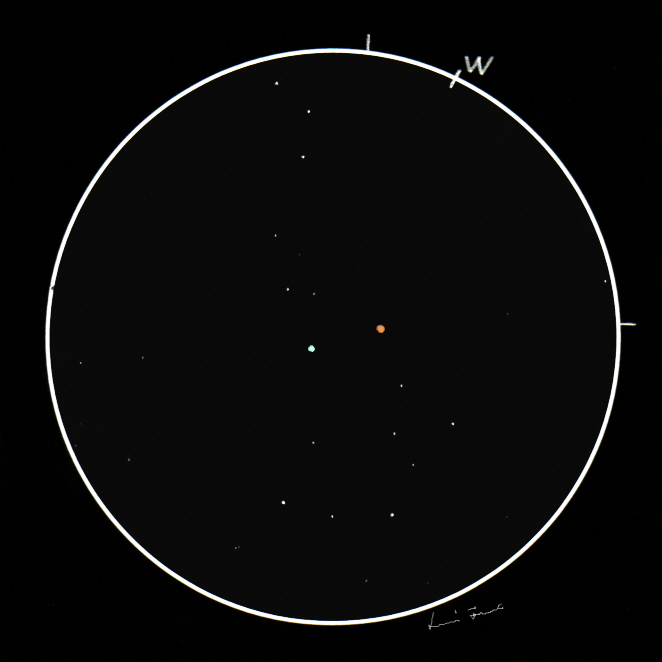
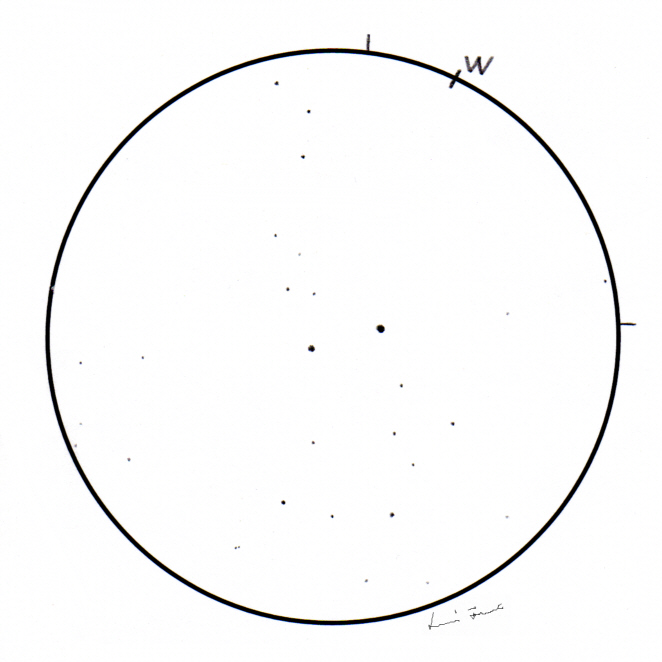
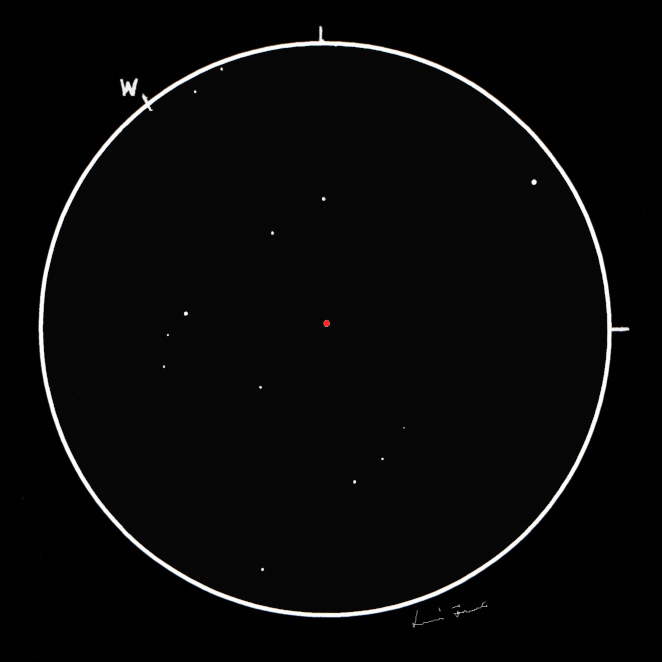
Albireo (TVICS)
|
|
Egyéb elnevezés: Beta Cygni
|
|
Rektaszcenzió: 19h 31m
|
Deklináció: 28° 0'
|
|
Csillagkép: Cygnus
|
|
Dátum/idő: 2012.08.14 22:30 UT
|
|
Műszer: 300/1500 Newton
|
|
Látómező: 13'
|
Nagyítás és szűrő(k): 250x
|
|
Nyugodtság: 8/10
|
Átlátszóság: 4/5
|
|
SQM: 21.32 m/as2
|
Hőmérséklet: 6°C
|
|
Páratartalom: száraz
|
Szél: nincs
|
|
Látvány: 4 - sok részlet, nagyon érdekes, egyedi kinézet
|
|
Nehézség: 1 - azonnal látható, nem szükséges sötétadaptáció vagy elfordított látás
|
|
Pozíció: 1 - nagyon könnyű, sok fényes csillag a közelben
|
|
Helyszín: Nádasdladány, Magyarország
|
|
Észlelő: Ferenc Lovró
|
Leírás:
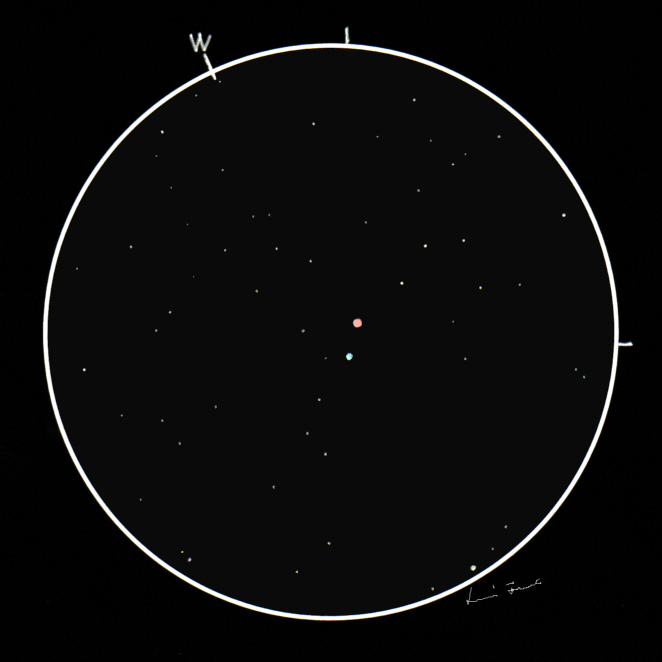
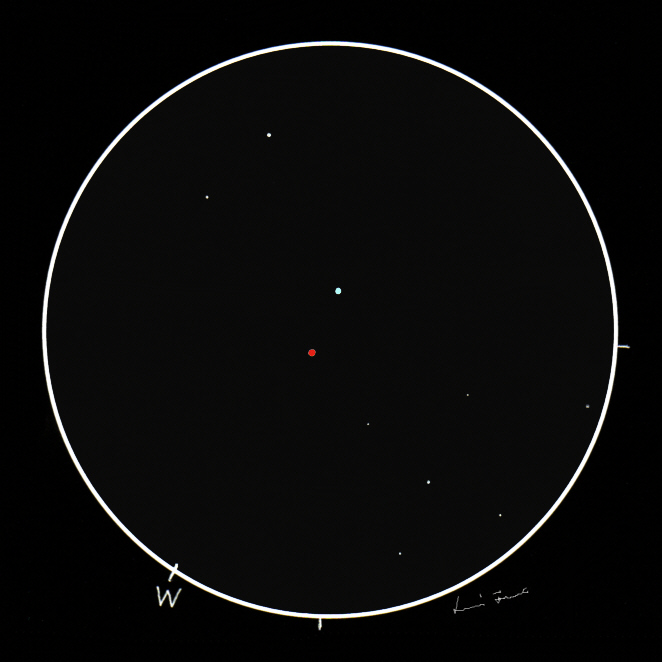
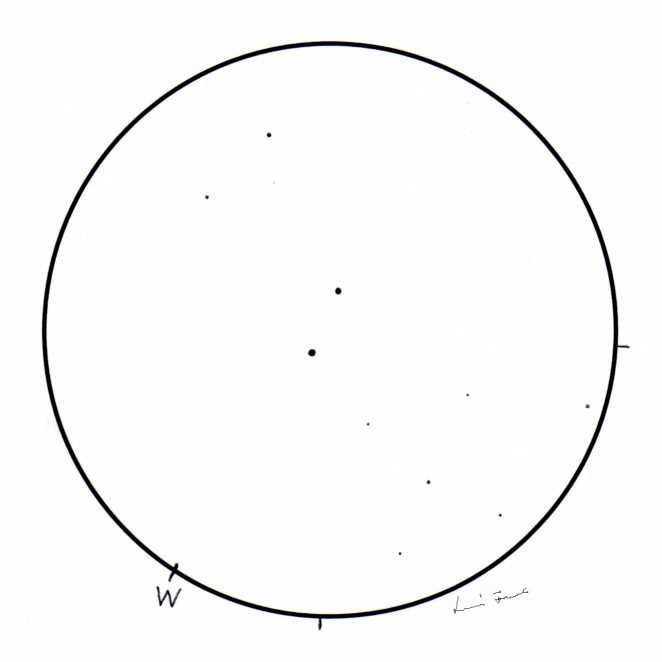
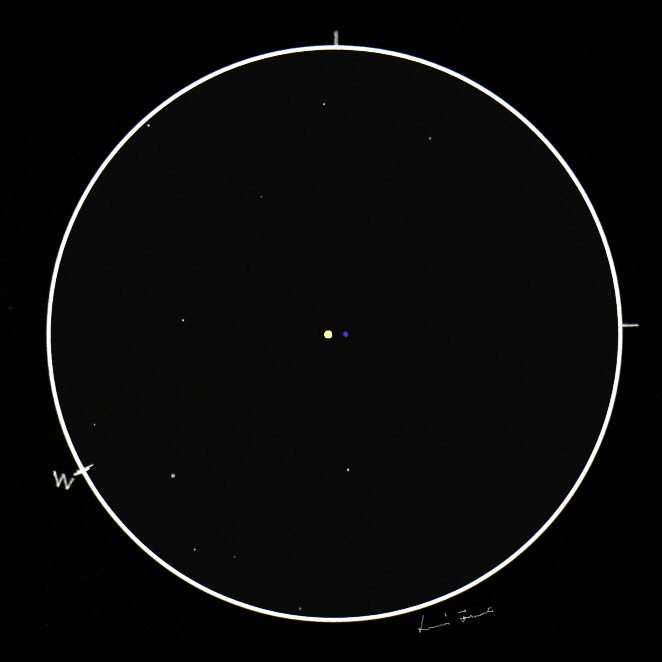
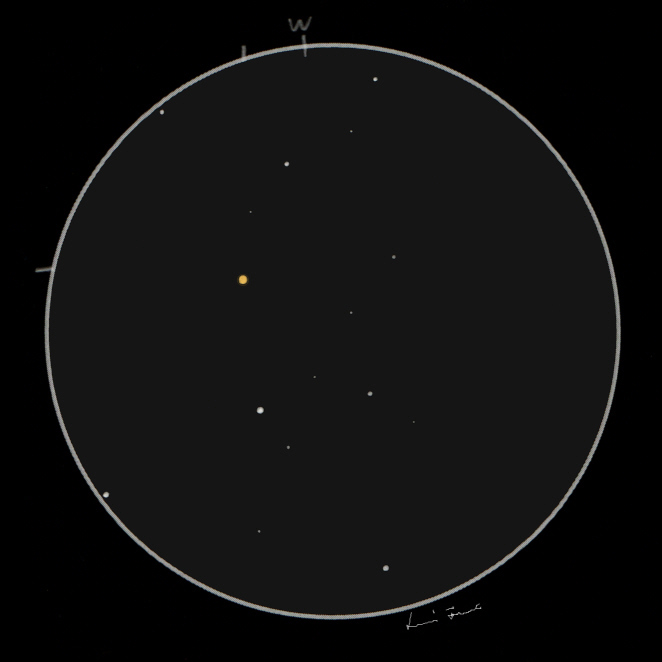
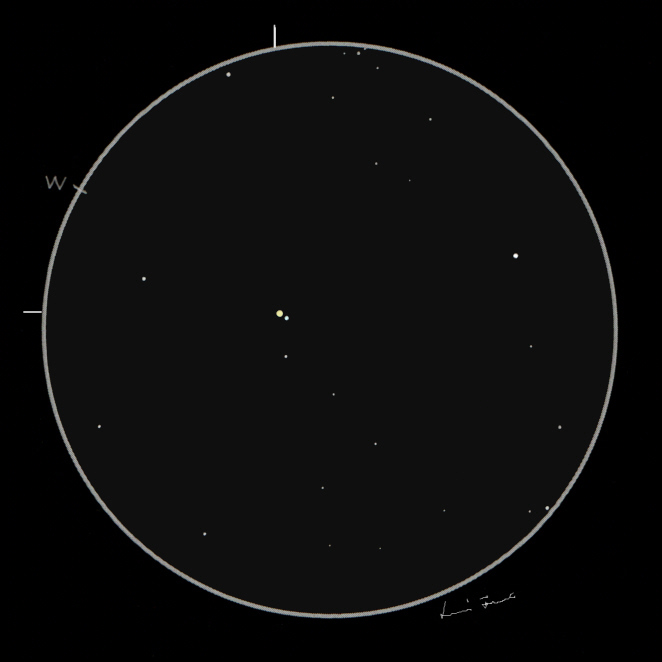
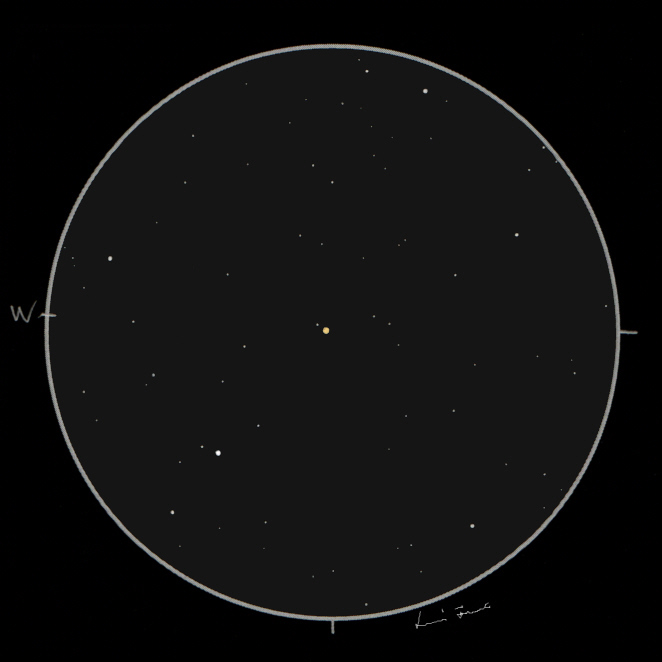
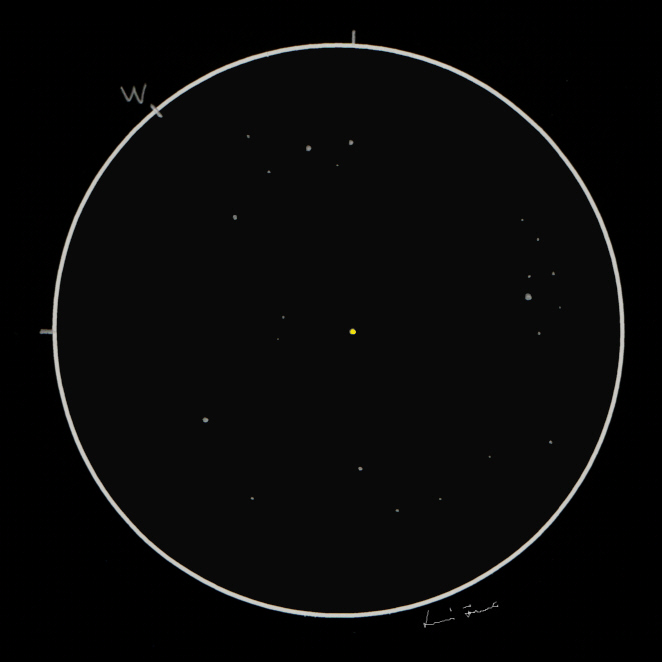
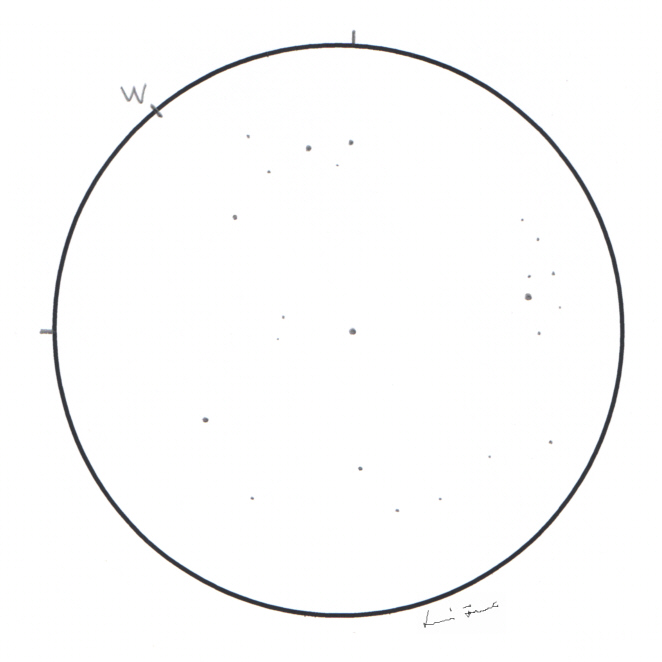
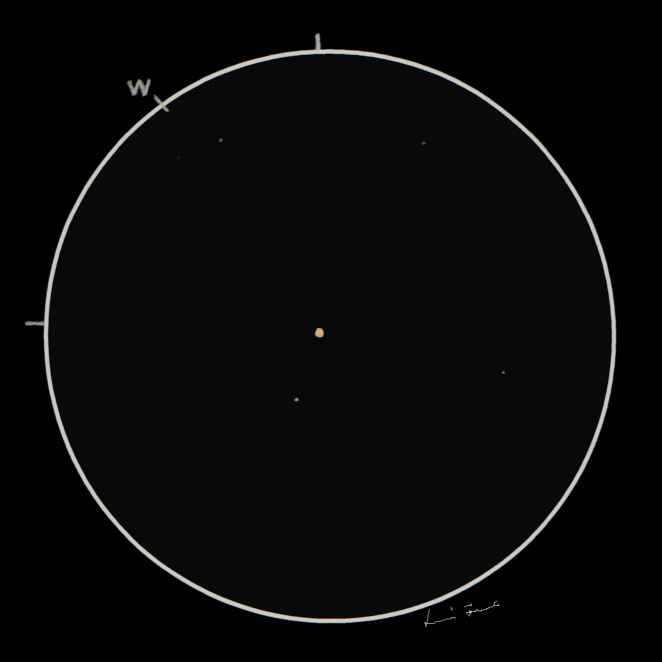
Rendkívül tetszetős látvány, a színkontrasztos kettősök iskolapéldája. A főcsillag vörös, némi narancsos beütéssel, míg kísérője némileg halványabb és világoskék tónusú. Erősen ajánott észlelése, talán a legkönnyebb színes objektum az égen.
|
|
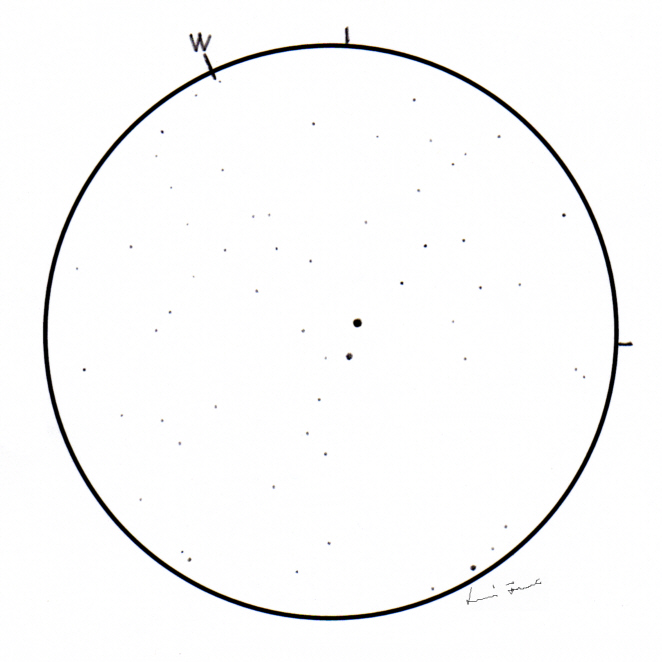
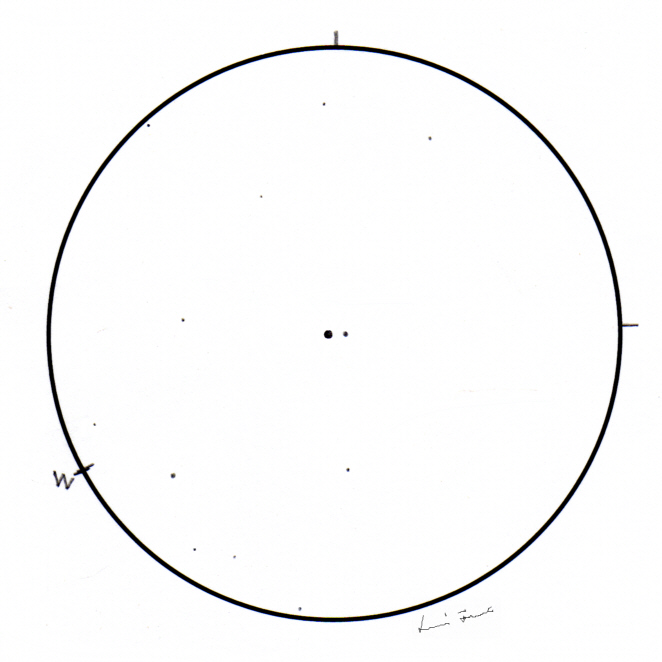
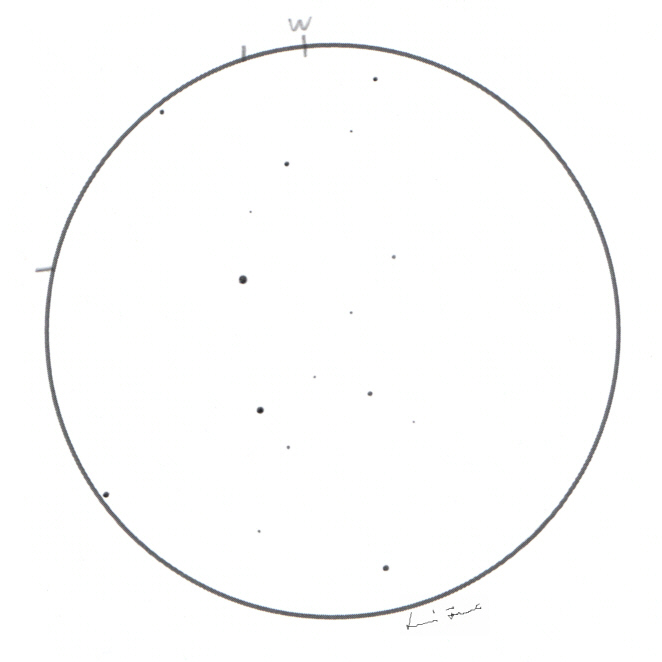
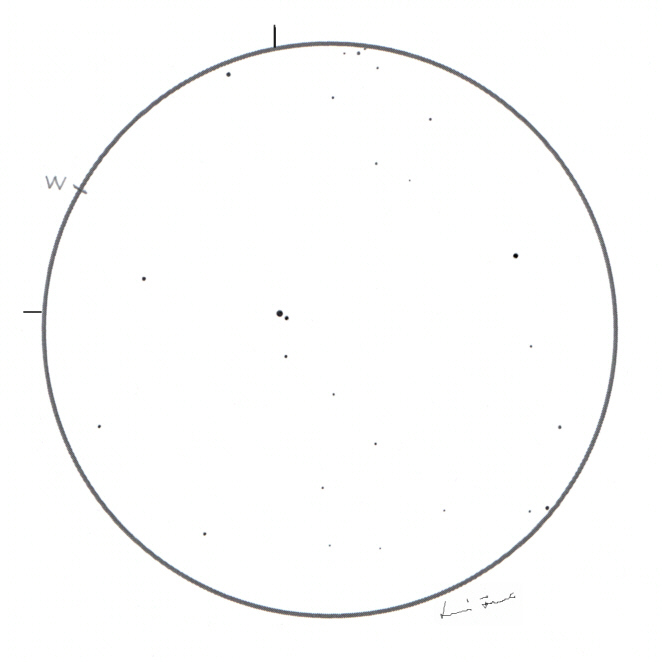
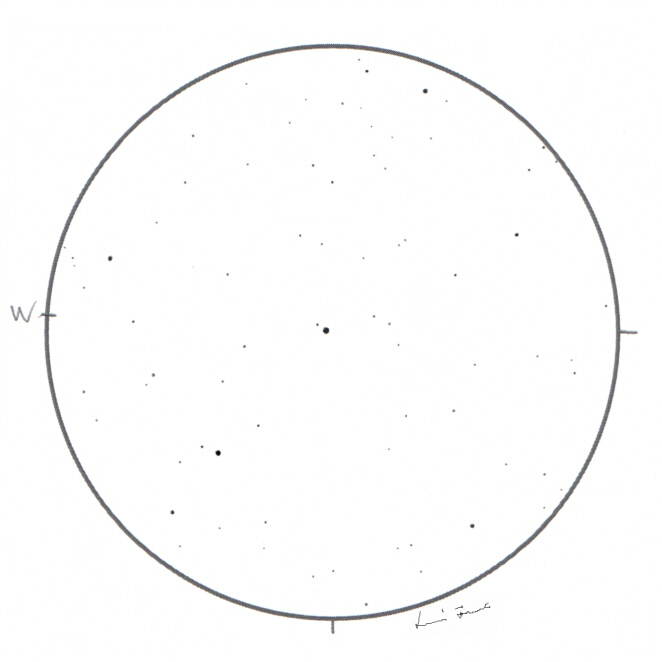
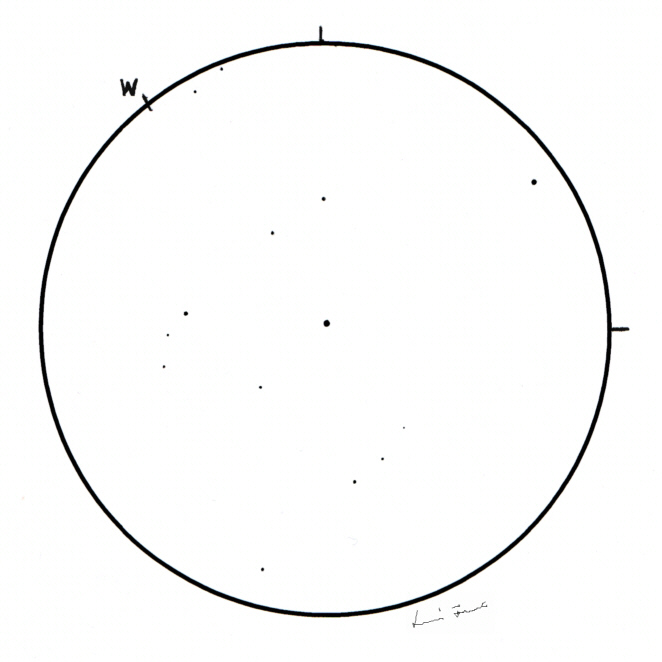
Nagyfelbontású képek: [ inverz rajz | eredeti rajz ]
|
|
Albireo (TVICS)
|
|
Also known as: Beta Cygni
|
|
Right ascension: 19h 31m
|
Declination: 28° 0'
|
|
Constellation: Cygnus
|
|
Date/time: 2012.08.14 22:30 UT
|
|
Equipment: 12" f/5 Newtonian
|
|
FoV: 13'
|
Magnification and filter(s): 250x
|
|
Seeing: 8/10
|
Transparency: 4/5
|
|
SQM: 21.32 m/as2
|
Temperature: 6°C
|
|
Humidity: dry
|
Wind: none
|
|
Sight: 4 - lots of details, very interesting, unique look
|
|
Difficulty: 1 - instantly visible, no dark adaptation or averted vision needed
|
|
Position: 1 - very easy, many bright stars nearby
|
|
Location: Nádasdladány, Hungary
|
|
Observer: Ferenc Lovró
|
Description:
A very spectacular view, the prime exemplar for colour contrasted binary stars. The primary star is red with a hint of orange while the secondary star is somewhat fainter and light blue. A must see couple that is also the easiest colourful object you can find.
|
|
Hi-resolution image: [ reversed sketch | original sketch ]
|
|
|
T Lyrae (TVICS)
|
|
Egyéb elnevezés: T LYR
|
|
Rektaszcenzió: 18h 33m
|
Deklináció: 37° 5'
|
|
Csillagkép: Lyra
|
|
Dátum/idő: 2012.08.14 23:00 UT
|
|
Műszer: 300/1500 Newton
|
|
Látómező: 14'
|
Nagyítás és szűrő(k): 250x
|
|
Nyugodtság: 7/10
|
Átlátszóság: 4/5
|
|
SQM: 21.2 m/as2
|
Hőmérséklet: 6°C
|
|
Páratartalom: száraz
|
Szél: nincs
|
|
Látvány: 5 - rengeteg részlet, muszáj látni, leesett az állam
|
|
Nehézség: 2 - könnyen látható, némi sötétadaptáció szükséges, elfordított látás javíthat a részleteket
|
|
Pozíció: 3 - közepes, némi csillagról-csillagra ugrálás szükséges
|
|
Helyszín: Nádasdladány, Magyarország
|
|
Észlelő: Ferenc Lovró
|
Leírás:
Mikor először pillantottam meg ezt a csillagot, egyszerűen leesett az állam, és szégyen, nem szégyen, de felkiáltottam, hogy "aztak*rva". Valószínűleg ez a legvörösebb csillag az égen. Minden eddig látott objektumnál látványosabb, bár a WZ Cas továbbra is uralja a színes csillagok világát a szép, színkontrasztos kék kísérőjével. Ez a változócsillag egy magányos példány, csodás színével könnyű megtalálni, bár viszonylag halvány, és fel kell magadat készíteni, hogy olyan dolgot kell keresned a látómezőben, ami teljesen eltér a megszokott fehér pontocskáktól: érdekes módon pont a színe miatt lehet nehéz objektum a tapasztalatlan szemlélőknek!
Muszáj látnod ezt a csillagot!
|
|
Nagyfelbontású képek: [ inverz rajz | eredeti rajz ]
|
|
T Lyrae (TVICS)
|
|
Also known as: T LYR
|
|
Right ascension: 18h 33m
|
Declination: 37° 5'
|
|
Constellation: Lyra
|
|
Date/time: 2012.08.14 23:00 UT
|
|
Equipment: 12" f/5 Newtonian
|
|
FoV: 14'
|
Magnification and filter(s): 250x
|
|
Seeing: 7/10
|
Transparency: 4/5
|
|
SQM: 21.2 m/as2
|
Temperature: 6°C
|
|
Humidity: dry
|
Wind: none
|
|
Sight: 5 - plentyful of details, a must see object, jaws dropped
|
|
Difficulty: 2 - easily visible, some dark adaptation needed, averted vision might add to details
|
|
Position: 3 - moderate, some starhopping needed
|
|
Location: Nádasdladány, Hungary
|
|
Observer: Ferenc Lovró
|
Description:
When I first glimpsed this star, my jaws simply dropped and I regret, but the first thing I said was "oh f*ck". This is most probably the reddest star you can ever find. Everything I ever saw is surpassed by the looks of this star, although WZ CAS still rules the world of colourful stars with its nicely contrasting blue companion star. This variable star is a lonely one, and with its beautiful colour it's also an easy find, although it is a bit faint and you must prepare yourself for finding something in the FoV that is not a shade of white: interesting, but this uniqueness makes it a bit hard to find for the inexperienced eye!
This star is a MUST see object!
|
|
Hi-resolution image: [ reversed sketch | original sketch ]
|
|
|
U Cygni (TVICS)
|
|
Egyéb elnevezés: U CYG
|
|
Rektaszcenzió: 20h 20m
|
Deklináció: 47° 56'
|
|
Csillagkép: Cygnus
|
|
Dátum/idő: 2012.08.15 22:30 UT
|
|
Műszer: 300/1500 Newton
|
|
Látómező: 11'
|
Nagyítás és szűrő(k): 250x
|
|
Nyugodtság: 8/10
|
Átlátszóság: 3/5
|
|
SQM: 21.18 m/as2
|
Hőmérséklet: 12°C
|
|
Páratartalom: száraz
|
Szél: nincs
|
|
Látvány: 4 - sok részlet, nagyon érdekes, egyedi kinézet
|
|
Nehézség: 1 - azonnal látható, nem szükséges sötétadaptáció vagy elfordított látás
|
|
Pozíció: 1 - nagyon könnyű, sok fényes csillag a közelben
|
|
Helyszín: Nádasdladány, Magyarország
|
|
Észlelő: Ferenc Lovró
|
Leírás:
Nagyon szép narancssárga csillag, mely a nála kissé halványabb kék kísérővel alkot szép kontrasztos párost.
|
|
Nagyfelbontású képek: [ inverz rajz | eredeti rajz ]
|
|
U Cygni (TVICS)
|
|
Also known as: U CYG
|
|
Right ascension: 20h 20m
|
Declination: 47° 56'
|
|
Constellation: Cygnus
|
|
Date/time: 2012.08.15 22:30 UT
|
|
Equipment: 12" f/5 Newtonian
|
|
FoV: 11'
|
Magnification and filter(s): 250x
|
|
Seeing: 8/10
|
Transparency: 3/5
|
|
SQM: 21.18 m/as2
|
Temperature: 12°C
|
|
Humidity: dry
|
Wind: none
|
|
Sight: 4 - lots of details, very interesting, unique look
|
|
Difficulty: 1 - instantly visible, no dark adaptation or averted vision needed
|
|
Position: 1 - very easy, many bright stars nearby
|
|
Location: Nádasdladány, Hungary
|
|
Observer: Ferenc Lovró
|
Description:
A very nice orange star with a slightly fainter light blue companion nearby that contrast nicely.
|
|
Hi-resolution image: [ reversed sketch | original sketch ]
|
|
|
AX Cygni (TVICS)
|
|
Egyéb elnevezés: AX CYG
|
|
Rektaszcenzió: 19h 58m
|
Deklináció: 44° 18'
|
|
Csillagkép: Cygnus
|
|
Dátum/idő: 2012.08.15 23:00 UT
|
|
Műszer: 300/1500 Newton
|
|
Látómező: 13'
|
Nagyítás és szűrő(k): 250x
|
|
Nyugodtság: 8/10
|
Átlátszóság: 3/5
|
|
SQM: 21.25 m/as2
|
Hőmérséklet: 10°C
|
|
Páratartalom: száraz
|
Szél: nincs
|
|
Látvány: 4 - sok részlet, nagyon érdekes, egyedi kinézet
|
|
Nehézség: 2 - könnyen látható, némi sötétadaptáció szükséges, elfordított látás javíthat a részleteket
|
|
Pozíció: 3 - közepes, némi csillagról-csillagra ugrálás szükséges
|
|
Helyszín: Nádasdladány, Magyarország
|
|
Észlelő: Ferenc Lovró
|
Leírás:
Halvány, magányos vörös változócsillag, némi narancsos árnyalattal. Két viszonylag fényes csillag található a közelében Ny és ÉNy irányban, ezáltal egy szép háromszöget alkotva az AX Cygnivel. ÉK-re (a látómezőn kívül) egy szép kettőscsillag is található, ami szintén színesnek tűnik. Halványsága ellenére egy nagyon emlékezetes látvány.
|
|
Nagyfelbontású képek: [ inverz rajz | eredeti rajz ]
|
|
AX Cygni (TVICS)
|
|
Also known as: AX CYG
|
|
Right ascension: 19h 58m
|
Declination: 44° 18'
|
|
Constellation: Cygnus
|
|
Date/time: 2012.08.15 23:00 UT
|
|
Equipment: 12" f/5 Newtonian
|
|
FoV: 13'
|
Magnification and filter(s): 250x
|
|
Seeing: 8/10
|
Transparency: 3/5
|
|
SQM: 21.25 m/as2
|
Temperature: 10°C
|
|
Humidity: dry
|
Wind: none
|
|
Sight: 4 - lots of details, very interesting, unique look
|
|
Difficulty: 2 - easily visible, some dark adaptation needed, averted vision might add to details
|
|
Position: 3 - moderate, some starhopping needed
|
|
Location: Nádasdladány, Hungary
|
|
Observer: Ferenc Lovró
|
Description:
Faint, lonesome red variable star with a touch of orange. Two fairly bright stars located nearby to the W and NW, making a nice triangle with AX CYG. To the NE (outside this FoV) there's a binary that looks colourful too. Despite its faintness it is a very remarkable view.
|
|
Hi-resolution image: [ reversed sketch | original sketch ]
|
|
|
RS Cygni (TVICS)
|
|
Egyéb elnevezés: RS CYG
|
|
Rektaszcenzió: 20h 14m
|
Deklináció: 38° 46'
|
|
Csillagkép: Cygnus
|
|
Dátum/idő: 2012.08.15 23:30 UT
|
|
Műszer: 300/1500 Newton
|
|
Látómező: 17'
|
Nagyítás és szűrő(k): 250x
|
|
Nyugodtság: 8/10
|
Átlátszóság: 3/5
|
|
SQM: 21.2 m/as2
|
Hőmérséklet: 9°C
|
|
Páratartalom: száraz
|
Szél: nincs
|
|
Látvány: 3 - határozott részletek, érdekes látvány
|
|
Nehézség: 1 - azonnal látható, nem szükséges sötétadaptáció vagy elfordított látás
|
|
Pozíció: 3 - közepes, némi csillagról-csillagra ugrálás szükséges
|
|
Helyszín: Nádasdladány, Magyarország
|
|
Észlelő: Ferenc Lovró
|
Leírás:
Szép mélyvörös változócsillag, lehelletnyi narancs beütéssel, mely egy szép háromszög középső csúcsát alkotja. Ettől északra egy másik szép, színes TVICS csillagot, a HIP 100155-öt is érdemes felkeresni.
|
|
Nagyfelbontású képek: [ inverz rajz | eredeti rajz ]
|
|
RS Cygni (TVICS)
|
|
Also known as: RS CYG
|
|
Right ascension: 20h 14m
|
Declination: 38° 46'
|
|
Constellation: Cygnus
|
|
Date/time: 2012.08.15 23:30 UT
|
|
Equipment: 12" f/5 Newtonian
|
|
FoV: 17'
|
Magnification and filter(s): 250x
|
|
Seeing: 8/10
|
Transparency: 3/5
|
|
SQM: 21.2 m/as2
|
Temperature: 9°C
|
|
Humidity: dry
|
Wind: none
|
|
Sight: 3 - definite details, interesting look
|
|
Difficulty: 1 - instantly visible, no dark adaptation or averted vision needed
|
|
Position: 3 - moderate, some starhopping needed
|
|
Location: Nádasdladány, Hungary
|
|
Observer: Ferenc Lovró
|
Description:
Nice deep red variable star with a gentle touch of orange, the middle apex of a remarkable triangle of stars. To the N you may find another nice colourful TVICS star, HIP 100155.
|
|
Hi-resolution image: [ reversed sketch | original sketch ]
|
|
|
WDS H 4 113 (TVICS)
|
|
Egyéb elnevezés: Ward 1, WDS H4 113, HIP 103822
|
|
Rektaszcenzió: 21h 3m
|
Deklináció: 39° 34'
|
|
Csillagkép: Cygnus
|
|
Dátum/idő: 2012.08.16 0:00 UT
|
|
Műszer: 300/1500 Newton
|
|
Látómező: 11'
|
Nagyítás és szűrő(k): 250x
|
|
Nyugodtság: 7/10
|
Átlátszóság: 3/5
|
|
SQM: 21.19 m/as2
|
Hőmérséklet: 9°C
|
|
Páratartalom: alacsony
|
Szél: nincs
|
|
Látvány: 3 - határozott részletek, érdekes látvány
|
|
Nehézség: 2 - könnyen látható, némi sötétadaptáció szükséges, elfordított látás javíthat a részleteket
|
|
Pozíció: 2 - könnyű, fényes csillag a közelben
|
|
Helyszín: Nádasdladány, Magyarország
|
|
Észlelő: Ferenc Lovró
|
Leírás:
Nagyon szép színkontrasztos kettőscsillag. Nem igazán szoros. A főcsillag (A) intenzív arany színű, míg a kísérő (B) kék, némi lilás tónussal. Valójában ez nem is csak egy egyszerű kettőscsillag, hanem mint később kiderült a látómező több csillaga is kapcsolatban áll a főcsillaggal, ahogy az ebben a dokumentumban is le van írva.
|
|
Nagyfelbontású képek: [ inverz rajz | eredeti rajz ]
|
|
WDS H 4 113 (TVICS)
|
|
Also known as: Ward 1, WDS H4 113, HIP 103822
|
|
Right ascension: 21h 3m
|
Declination: 39° 34'
|
|
Constellation: Cygnus
|
|
Date/time: 2012.08.16 0:00 UT
|
|
Equipment: 12" f/5 Newtonian
|
|
FoV: 11'
|
Magnification and filter(s): 250x
|
|
Seeing: 7/10
|
Transparency: 3/5
|
|
SQM: 21.19 m/as2
|
Temperature: 9°C
|
|
Humidity: low
|
Wind: none
|
|
Sight: 3 - definite details, interesting look
|
|
Difficulty: 2 - easily visible, some dark adaptation needed, averted vision might add to details
|
|
Position: 2 - easy, bright star nearby
|
|
Location: Nádasdladány, Hungary
|
|
Observer: Ferenc Lovró
|
Description:
A very nice, colour contrasted binary. Not really tight. The primary member (A) is intense golden yellow while the secondary member (B) is blue with a tint of purple. In fact, this is not simply a binary of two stars, but I found out later while doing a research on this object that many of the other stars on this sketch are connected to the primary (as described in this document).
|
|
Hi-resolution image: [ reversed sketch | original sketch ]
|
|
|
WZ Cassiopeiae (TVICS)
|
|
Egyéb elnevezés: WZ CAS, Hip 99
|
|
Rektaszcenzió: 0h 2m
|
Deklináció: 60° 26'
|
|
Csillagkép: Cassiopeia
|
|
Dátum/idő: 2012.09.07 20:25 UT
|
|
Műszer: 114/900 Newton
|
|
Látómező: 8'
|
Nagyítás és szűrő(k): 224x
|
|
Nyugodtság: 8/10
|
Átlátszóság: 4/5
|
|
SQM: 21.33 m/as2
|
Hőmérséklet: 10°C
|
|
Páratartalom: alacsony
|
Szél: nincs
|
|
Látvány: 4 - sok részlet, nagyon érdekes, egyedi kinézet
|
|
Nehézség: 1 - azonnal látható, nem szükséges sötétadaptáció vagy elfordított látás
|
|
Pozíció: 3 - közepes, némi csillagról-csillagra ugrálás szükséges
|
|
Helyszín: Lipótfa, Zselic, Magyarország
|
|
Észlelő: Ferenc Lovró
|
Leírás:
Egyik kedvenc változó/kettőscsillagom. Évekkel ezelőtt egyszerű égpásztázás közben bukkantam rá véletlenül, a főcsillag csodás piros szine miatt könnyű volt kiszúrni. Társa fényes kék színű, nagyon szép kontrasztot képez a főcsillaggal. Fényességük közel azonos, engem egy miniatűr Albireóra emlékeztetnek. A valóságban a látómező átmérője nagyjából másfélszerese volt az itt ábrázoltnak, de annyira sötét volt az ég, hogy nehezen lehetett kivenni az okulárban a látómező szélét.
|
|
Nagyfelbontású képek: [ inverz rajz | eredeti rajz ]
|
|
WZ Cassiopeiae (TVICS)
|
|
Also known as: WZ CAS, Hip 99
|
|
Right ascension: 0h 2m
|
Declination: 60° 26'
|
|
Constellation: Cassiopeia
|
|
Date/time: 2012.09.07 20:25 UT
|
|
Equipment: 4.5" f/8 Newtonian
|
|
FoV: 8'
|
Magnification and filter(s): 224x
|
|
Seeing: 8/10
|
Transparency: 4/5
|
|
SQM: 21.33 m/as2
|
Temperature: 10°C
|
|
Humidity: low
|
Wind: none
|
|
Sight: 4 - lots of details, very interesting, unique look
|
|
Difficulty: 1 - instantly visible, no dark adaptation or averted vision needed
|
|
Position: 3 - moderate, some starhopping needed
|
|
Location: Lipótfa, Zselic, Hungary
|
|
Observer: Ferenc Lovró
|
Description:
One of my favorite variable/binary stars. I've found it years ago just by wandering on the sky with my telescope, and it was very easy to notice it because of the beautiful red colour of the primary star. The companion has a bright blue colour, contrasting very nicely with the primary. Their luminosity is nearly similar, they resemble me of a miniature Albireo. In fact the diameter of the FoV was about 1.5 times as large as displayed, but the sky was so dark that it was hard to see the border of the FoV in the eyepiece.
|
|
Hi-resolution image: [ reversed sketch | original sketch ]
|
|
|
Mu Cephei (TVICS)
|
|
Egyéb elnevezés: Herschel's Garnet Star
|
|
Rektaszcenzió: 21h 44m
|
Deklináció: 58° 51'
|
|
Csillagkép: Cepheus
|
|
Dátum/idő: 2012.09.12 00:00 UT
|
|
Műszer: 300/1500 Newton
|
|
Látómező: 14'
|
Nagyítás és szűrő(k): 250x
|
|
Nyugodtság: 7/10
|
Átlátszóság: 3/5
|
|
SQM: 21.22 m/as2
|
Hőmérséklet: 10°C
|
|
Páratartalom: száraz
|
Szél: szellő
|
|
Látvány: 3 - határozott részletek, érdekes látvány
|
|
Nehézség: 1 - azonnal látható, nem szükséges sötétadaptáció vagy elfordított látás
|
|
Pozíció: 1 - nagyon könnyű, sok fényes csillag a közelben
|
|
Helyszín: Nádasdladány, Magyarország
|
|
Észlelő: Ferenc Lovró
|
Leírás:
Gyönyörű arany színű csillag. Nagyon fényes, uralja környezetét. Mivel szabadszemmel is nagyon könnyen látható, ezért kifejezetten könnyű célpont. Ha a T Lyrae verhetetlen a vörösségben, valószínűleg ez a csillag pedig megnyerné az arany kategóriát. Egyébként jó tudni, hogy ez az egyik legfényesebb ismert csillag, ami egy szupermasszív óriás, életének a végéhez közeledve. Milyen szomorú.
|
|
Nagyfelbontású képek: [ inverz rajz | eredeti rajz ]
|
|
Mu Cephei (TVICS)
|
|
Also known as: Herschel's Garnet Star
|
|
Right ascension: 21h 44m
|
Declination: 58° 51'
|
|
Constellation: Cepheus
|
|
Date/time: 2012.09.12 00:00 UT
|
|
Equipment: 12" f/5 Newtonian
|
|
FoV: 14'
|
Magnification and filter(s): 250x
|
|
Seeing: 7/10
|
Transparency: 3/5
|
|
SQM: 21.22 m/as2
|
Temperature: 10°C
|
|
Humidity: dry
|
Wind: breeze
|
|
Sight: 3 - definite details, interesting look
|
|
Difficulty: 1 - instantly visible, no dark adaptation or averted vision needed
|
|
Position: 1 - very easy, many bright stars nearby
|
|
Location: Nádasdladány, Hungary
|
|
Observer: Ferenc Lovró
|
Description:
Beautiful golden star also known as Herschel's Garnet Star. With its high luminosity it dominates the field. As it is easily visible also with the bare eyes, it's a very easy target. If T Lyrae is unbeatable in redness, this star is probably the winner in the golden category. This star is actually one of the brightest known stars, a supermassive giant nearing the end of its life. How sad.
|
|
Hi-resolution image: [ reversed sketch | original sketch ]
|
|
|
Almach (TVICS)
|
|
Egyéb elnevezés: Gamma Andromedae, Gamma And
|
|
Rektaszcenzió: 2h 6m
|
Deklináció: 42° 24'
|
|
Csillagkép: Andromeda
|
|
Dátum/idő: 2012.09.25 23:20 UT
|
|
Műszer: 300/1500 Newton
|
|
Látómező: 14'
|
Nagyítás és szűrő(k): 250x
|
|
Nyugodtság: 3/10
|
Átlátszóság: 2/5
|
|
SQM: 20.12 m/as2
|
Hőmérséklet: 13°C
|
|
Páratartalom: közepes
|
Szél: közepes
|
|
Látvány: 3 - határozott részletek, érdekes látvány
|
|
Nehézség: 1 - azonnal látható, nem szükséges sötétadaptáció vagy elfordított látás
|
|
Pozíció: 1 - nagyon könnyű, sok fényes csillag a közelben
|
|
Helyszín: Nádasdladány, Magyarország
|
|
Észlelő: Ferenc Lovró
|
Leírás:
Szép kettőscsillag, nem túl szoros, nagy fényességkülönbséggel. Színük főképp friss, nem sötétadaptálódott szemmel látható könnyen. A főcsillag arany színű, enyhe zöld árnyalattal, társa sötétkék, icipici lilás beütéssel. Az erős holdfény ötvözve a közepes páratartalommal nem igazán könnyítette meg az észlelését, talán ezért is hiányoznak a halványabb csillagok a látómezőből.
|
|
Nagyfelbontású képek: [ inverz rajz | eredeti rajz ]
|
|
Almach (TVICS)
|
|
Also known as: Gamma Andromedae, Gamma And
|
|
Right ascension: 2h 6m
|
Declination: 42° 24'
|
|
Constellation: Andromeda
|
|
Date/time: 2012.09.25 23:20 UT
|
|
Equipment: 12" f/5 Newtonian
|
|
FoV: 14'
|
Magnification and filter(s): 250x
|
|
Seeing: 3/10
|
Transparency: 2/5
|
|
SQM: 20.12 m/as2
|
Temperature: 13°C
|
|
Humidity: moderate
|
Wind: moderate
|
|
Sight: 3 - definite details, interesting look
|
|
Difficulty: 1 - instantly visible, no dark adaptation or averted vision needed
|
|
Position: 1 - very easy, many bright stars nearby
|
|
Location: Nádasdladány, Hungary
|
|
Observer: Ferenc Lovró
|
Description:
A nice binary star, not that close to eachother, but with large difference in brightness. The colour is best noticeable with fresh, non dark adapted eyes. The primary member has a golden colour with a touch of green while the companion is deep blue with a very little purplish tint. The strong moonlight combined with moderate humidity is not a favorable condition for observation, perhaps that's why the field is lacking faint stars.
|
|
Hi-resolution image: [ reversed sketch | original sketch ]
|
|
|
UU Aurigae (TVICS)
|
|
Egyéb elnevezés: UU AUR
|
|
Rektaszcenzió: 6h 37m
|
Deklináció: 38° 26'
|
|
Csillagkép: Auriga
|
|
Dátum/idő: 2013.02.28 18:20 UT
|
|
Műszer: 300/1500 Newton
|
|
Látómező: 16'
|
Nagyítás és szűrő(k): 250x
|
|
Nyugodtság: 7/10
|
Átlátszóság: 3/5
|
|
SQM: 21.03 m/as2
|
Hőmérséklet: 5°C
|
|
Páratartalom: alacsony
|
Szél: nincs
|
|
Látvány: 3 - határozott részletek, érdekes látvány
|
|
Nehézség: 1 - azonnal látható, nem szükséges sötétadaptáció vagy elfordított látás
|
|
Pozíció: 3 - közepes, némi csillagról-csillagra ugrálás szükséges
|
|
Helyszín: Nádasdladány, Magyarország
|
|
Észlelő: Ferenc Lovró
|
Leírás:
Szép, fényes változó széncsillag. Narancsvörös színe azonnal látható, engem a tojássárgája színére emlékeztet. Szép célpont!
|
|
Nagyfelbontású képek: [ inverz rajz | eredeti rajz ]
|
|
UU Aurigae (TVICS)
|
|
Also known as: UU AUR
|
|
Right ascension: 6h 37m
|
Declination: 38° 26'
|
|
Constellation: Auriga
|
|
Date/time: 2013.02.28 18:20 UT
|
|
Equipment: 12" f/5 Newtonian
|
|
FoV: 16'
|
Magnification and filter(s): 250x
|
|
Seeing: 7/10
|
Transparency: 3/5
|
|
SQM: 21.03 m/as2
|
Temperature: 5°C
|
|
Humidity: low
|
Wind: none
|
|
Sight: 3 - definite details, interesting look
|
|
Difficulty: 1 - instantly visible, no dark adaptation or averted vision needed
|
|
Position: 3 - moderate, some starhopping needed
|
|
Location: Nádasdladány, Hungary
|
|
Observer: Ferenc Lovró
|
Description:
Nice bright variable carbon star. I can see its orange/red colour instantly, its tone reminds me of the colour of yolk. A nice one.
|
|
Hi-resolution image: [ reversed sketch | original sketch ]
|
|
|
R Leonis (TVICS)
|
|
Egyéb elnevezés: R LEO
|
|
Rektaszcenzió: 9h 48m
|
Deklináció: 11° 22'
|
|
Csillagkép: Leo
|
|
Dátum/idő: 2013.03.07 21:45 UT
|
|
Műszer: 300/1500 Newton
|
|
Látómező: 16'
|
Nagyítás és szűrő(k): 250x
|
|
Nyugodtság: 4/10
|
Átlátszóság: 3/5
|
|
SQM: 21.27 m/as2
|
Hőmérséklet: 6°C
|
|
Páratartalom: alacsony
|
Szél: szellő
|
|
Látvány: 3 - határozott részletek, érdekes látvány
|
|
Nehézség: 1 - azonnal látható, nem szükséges sötétadaptáció vagy elfordított látás
|
|
Pozíció: 2 - könnyű, fényes csillag a közelben
|
|
Helyszín: Nádasdladány, Magyarország
|
|
Észlelő: Ferenc Lovró
|
Leírás:
Nagyon szép, fényes narancs színű változócsillag, nagyon könnyű célpont, elég fényes kisebb távcsövek számára is.
|
|
Nagyfelbontású képek: [ inverz rajz | eredeti rajz ]
|
|
R Leonis (TVICS)
|
|
Also known as: R LEO
|
|
Right ascension: 9h 48m
|
Declination: 11° 22'
|
|
Constellation: Leo
|
|
Date/time: 2013.03.07 21:45 UT
|
|
Equipment: 12" f/5 Newtonian
|
|
FoV: 16'
|
Magnification and filter(s): 250x
|
|
Seeing: 4/10
|
Transparency: 3/5
|
|
SQM: 21.27 m/as2
|
Temperature: 6°C
|
|
Humidity: low
|
Wind: breeze
|
|
Sight: 3 - definite details, interesting look
|
|
Difficulty: 1 - instantly visible, no dark adaptation or averted vision needed
|
|
Position: 2 - easy, bright star nearby
|
|
Location: Nádasdladány, Hungary
|
|
Observer: Ferenc Lovró
|
Description:
A very nice, bright orange variable, that is very easy to find and bright enough to be observed with small telescopes.
|
|
Hi-resolution image: [ reversed sketch | original sketch ]
|
|
|
V CrB (TVICS)
|
|
Egyéb elnevezés: V Coronae Borealis
|
|
Rektaszcenzió: 15h 50m
|
Deklináció: 39° 34'
|
|
Csillagkép: Corona Borealis
|
|
Dátum/idő: 2013.06.17 22:45 UT
|
|
Műszer: 300/1500 Newton
|
|
Látómező: 14'
|
Nagyítás és szűrő(k): 250x
|
|
Nyugodtság: 8/10
|
Átlátszóság: 3/5
|
|
SQM: 21.02 m/as2
|
Hőmérséklet: 17°C
|
|
Páratartalom: alacsony
|
Szél: nincs
|
|
Látvány: 4 - sok részlet, nagyon érdekes, egyedi kinézet
|
|
Nehézség: 2 - könnyen látható, némi sötétadaptáció szükséges, elfordított látás javíthat a részleteket
|
|
Pozíció: 4 - nehéz, összetett csillagról-csillagra ugrálás szükséges
|
|
Helyszín: Nádasdladány, Magyarország
|
|
Észlelő: Ferenc Lovró
|
Leírás:
Meglepően halvány, de ennek ellenére nagyon látványos széncsillag. Kissé nehéz megtalálni, de megéri vetni rá egy pillantást. Mély vörös színű, lehelletnyi naranccsal.
|
|
Nagyfelbontású képek: [ inverz rajz | eredeti rajz ]
|
|
V CrB (TVICS)
|
|
Also known as: V Coronae Borealis
|
|
Right ascension: 15h 50m
|
Declination: 39° 34'
|
|
Constellation: Corona Borealis
|
|
Date/time: 2013.06.17 22:45 UT
|
|
Equipment: 12" f/5 Newtonian
|
|
FoV: 14'
|
Magnification and filter(s): 250x
|
|
Seeing: 8/10
|
Transparency: 3/5
|
|
SQM: 21.02 m/as2
|
Temperature: 17°C
|
|
Humidity: low
|
Wind: none
|
|
Sight: 4 - lots of details, very interesting, unique look
|
|
Difficulty: 2 - easily visible, some dark adaptation needed, averted vision might add to details
|
|
Position: 4 - hard, complex starhopping needed
|
|
Location: Nádasdladány, Hungary
|
|
Observer: Ferenc Lovró
|
Description:
Surprisingly faint yet very spectacular carbon star. It's a bit difficult to locate, but worth taking a peek. It has a colour of deep red with a very little orange in it.
|
|
Hi-resolution image: [ reversed sketch | original sketch ]
|
|
|
RR Her (TVICS)
|
|
Egyéb elnevezés: RR Herculis
|
|
Rektaszcenzió: 16h 4m
|
Deklináció: 50° 30'
|
|
Csillagkép: Hercules
|
|
Dátum/idő: 2013.06.18 01:00 UT
|
|
Műszer: 300/1500 Newton
|
|
Látómező: 15'
|
Nagyítás és szűrő(k): 250x
|
|
Nyugodtság: 7/10
|
Átlátszóság: 3/5
|
|
SQM: 21.32 m/as2
|
Hőmérséklet: 15°C
|
|
Páratartalom: közepes
|
Szél: nincs
|
|
Látvány: 3 - határozott részletek, érdekes látvány
|
|
Nehézség: 1 - azonnal látható, nem szükséges sötétadaptáció vagy elfordított látás
|
|
Pozíció: 2 - könnyű, fényes csillag a közelben
|
|
Helyszín: Nádasdladány, Magyarország
|
|
Észlelő: Ferenc Lovró
|
Leírás:
Valószínűleg a legfényesebb tagja egy érdekes aszterizmusnak. Fényes narancssárga színe azonnal szembetűnik. Szép csillag, de inkább a környezete teszi csak igazán különlegessé.
|
|
Nagyfelbontású képek: [ inverz rajz | eredeti rajz ]
|
|
RR Her (TVICS)
|
|
Also known as: RR Herculis
|
|
Right ascension: 16h 4m
|
Declination: 50° 30'
|
|
Constellation: Hercules
|
|
Date/time: 2013.06.18 01:00 UT
|
|
Equipment: 12" f/5 Newtonian
|
|
FoV: 15'
|
Magnification and filter(s): 250x
|
|
Seeing: 7/10
|
Transparency: 3/5
|
|
SQM: 21.32 m/as2
|
Temperature: 15°C
|
|
Humidity: moderate
|
Wind: none
|
|
Sight: 3 - definite details, interesting look
|
|
Difficulty: 1 - instantly visible, no dark adaptation or averted vision needed
|
|
Position: 2 - easy, bright star nearby
|
|
Location: Nádasdladány, Hungary
|
|
Observer: Ferenc Lovró
|
Description:
Probably the brightest member of an interesting asterism. Its bright orange colour is instantly visible. A nice star, but only its stellar neighborhood that makes it special.
|
|
Hi-resolution image: [ reversed sketch | original sketch ]
|
|
|
U Lyr (TVICS)
|
|
Egyéb elnevezés: U Lyrae
|
|
Rektaszcenzió: 19h 20m
|
Deklináció: 37° 53'
|
|
Csillagkép: Lyra
|
|
Dátum/idő: 2013.06.18 01:30 UT
|
|
Műszer: 300/1500 Newton
|
|
Látómező: '
|
Nagyítás és szűrő(k): 250x
|
|
Nyugodtság: 7/10
|
Átlátszóság: 3/5
|
|
SQM: 21.21 m/as2
|
Hőmérséklet: 15°C
|
|
Páratartalom: magas
|
Szél: nincs
|
|
Látvány: 3 - határozott részletek, érdekes látvány
|
|
Nehézség: 3 - közepesen látható, de sötétadaptáció szükséges, elfordított látás javíthat a részleteken
|
|
Pozíció: 1 - nagyon könnyű, sok fényes csillag a közelben
|
|
Helyszín: Nádasdladány, Magyarország
|
|
Észlelő: Ferenc Lovró
|
Leírás:
Szép, de halvány csillag, amely egy háromszög egyik csúcsát alkotja. Színét a vörös dominálja, nagyon kicsit narancsba hajolva.
|
|
Nagyfelbontású képek: [ inverz rajz | eredeti rajz ]
|
|
U Lyr (TVICS)
|
|
Also known as: U Lyrae
|
|
Right ascension: 19h 20m
|
Declination: 37° 53'
|
|
Constellation: Lyra
|
|
Date/time: 2013.06.18 01:30 UT
|
|
Equipment: 12" f/5 Newtonian
|
|
FoV: '
|
Magnification and filter(s): 250x
|
|
Seeing: 7/10
|
Transparency: 3/5
|
|
SQM: 21.21 m/as2
|
Temperature: 15°C
|
|
Humidity: high
|
Wind: none
|
|
Sight: 3 - definite details, interesting look
|
|
Difficulty: 3 - moderately visible, dark adaptation needed, averted vision might add to details
|
|
Position: 1 - very easy, many bright stars nearby
|
|
Location: Nádasdladány, Hungary
|
|
Observer: Ferenc Lovró
|
Description:
Nice but faint star, that is one vertex of a triangle of stars. Its colour is dominantly red, with a very little orange hue.
|
|
Hi-resolution image: [ reversed sketch | original sketch ]
|
|
|
Ras Algethi (TVICS)
|
|
Egyéb elnevezés: Rasalgethi, Alpha Herculis
|
|
Rektaszcenzió: 17h 15m
|
Deklináció: 14° 23'
|
|
Csillagkép: Hercules
|
|
Dátum/idő: 2013.07.01 22:10 UT
|
|
Műszer: 300/1500 Newton
|
|
Látómező: '
|
Nagyítás és szűrő(k): 250x
|
|
Nyugodtság: 3/10
|
Átlátszóság: 4/5
|
|
SQM: 21.34 m/as2
|
Hőmérséklet: 12°C
|
|
Páratartalom: közepes
|
Szél: nincs
|
|
Látvány: 3 - határozott részletek, érdekes látvány
|
|
Nehézség: 3 - közepesen látható, de sötétadaptáció szükséges, elfordított látás javíthat a részleteken
|
|
Pozíció: 1 - nagyon könnyű, sok fényes csillag a közelben
|
|
Helyszín: Nádasdladány, Magyarország
|
|
Észlelő: Ferenc Lovró
|
Leírás:
Szoros színkontrasztos kettőscsillag. A B tagot nem volt egyszerű megpillantani, mivel a gyenge seeing miatt a fényes A tag erősen táncolt a látómezőben, elrejtve ezzel társcsillagát. A fő komponens fényes arany színű, kísérője jóval halványabb, enyhén kékbe hajló fehér színű. Szép, de elég nehéz páros.
|
|
Nagyfelbontású képek: [ inverz rajz | eredeti rajz ]
|
|
Ras Algethi (TVICS)
|
|
Also known as: Rasalgethi, Alpha Herculis
|
|
Right ascension: 17h 15m
|
Declination: 14° 23'
|
|
Constellation: Hercules
|
|
Date/time: 2013.07.01 22:10 UT
|
|
Equipment: 12" f/5 Newtonian
|
|
FoV: '
|
Magnification and filter(s): 250x
|
|
Seeing: 3/10
|
Transparency: 4/5
|
|
SQM: 21.34 m/as2
|
Temperature: 12°C
|
|
Humidity: moderate
|
Wind: none
|
|
Sight: 3 - definite details, interesting look
|
|
Difficulty: 3 - moderately visible, dark adaptation needed, averted vision might add to details
|
|
Position: 1 - very easy, many bright stars nearby
|
|
Location: Nádasdladány, Hungary
|
|
Observer: Ferenc Lovró
|
Description:
A close colour contrasting binary. The B component wasn't easy to see as the bad seeing made the bright A component dancing in the FoV, hiding the close companion star. The main component is bright golden coloured, while its companion is much fainter white with bluish hue. Nice but difficult binary.
|
|
Hi-resolution image: [ reversed sketch | original sketch ]
|
|
|
BF Sge (Változócsillag)
|
|
Egyéb elnevezés: BF Sagittae
|
|
Rektaszcenzió: 20h 2m
|
Deklináció: 21° 5'
|
|
Csillagkép: Sagitta
|
|
Dátum/idő: 2013.07.01 23:05 UT
|
|
Műszer: 300/1500 Newton
|
|
Látómező: '
|
Nagyítás és szűrő(k): 250x
|
|
Nyugodtság: 5/10
|
Átlátszóság: 4/5
|
|
SQM: 21.38 m/as2
|
Hőmérséklet: 7°C
|
|
Páratartalom: közepes
|
Szél: nincs
|
|
Látvány: 1 - egyáltalán nem látványos
|
|
Nehézség: 4 - alig látható, sötétadaptáció és nagyon sötét ég szükséges, elfordított látás kell bizonyos részletekhez
|
|
Pozíció: 4 - nehéz, összetett csillagról-csillagra ugrálás szükséges
|
|
Helyszín: Nádasdladány, Magyarország
|
|
Észlelő: Ferenc Lovró
|
Leírás:
Csillaggazdag környezetben elhenyezkedő csillag, de mindenképpen kiemelkedik társai közül narancsba hajló fehéres színével. Elismerem, a színét az előző mondat alapján nehéz elképzelni, szóval érdemes lesz vetned rá egy pillantást. Elég nehéz objektum a környezete és halványsága miatt.
|
|
Nagyfelbontású képek: [ inverz rajz | eredeti rajz ]
|
|
BF Sge (Variable star)
|
|
Also known as: BF Sagittae
|
|
Right ascension: 20h 2m
|
Declination: 21° 5'
|
|
Constellation: Sagitta
|
|
Date/time: 2013.07.01 23:05 UT
|
|
Equipment: 12" f/5 Newtonian
|
|
FoV: '
|
Magnification and filter(s): 250x
|
|
Seeing: 5/10
|
Transparency: 4/5
|
|
SQM: 21.38 m/as2
|
Temperature: 7°C
|
|
Humidity: moderate
|
Wind: none
|
|
Sight: 1 - nothing spectacular
|
|
Difficulty: 4 - hardly visible, dark adaptation and very dark skies needed, averted vision is required to see details
|
|
Position: 4 - hard, complex starhopping needed
|
|
Location: Nádasdladány, Hungary
|
|
Observer: Ferenc Lovró
|
Description:
This star lies in a field rich of stars, but clearly stands out of the crowd with its faint orange dominated whiteish colour. OK, I agree that its colour is unimaginable based on this definition, so I guess you will have to see it yourself. Quite difficult object thanks to its field and faintness.
|
|
Hi-resolution image: [ reversed sketch | original sketch ]
|
|
|
X Sge (TVICS)
|
|
Egyéb elnevezés: X Sagittae
|
|
Rektaszcenzió: 20h 5m
|
Deklináció: 20° 39'
|
|
Csillagkép: Sagitta
|
|
Dátum/idő: 2013.07.01 23:30 UT
|
|
Műszer: 300/1500 Newton
|
|
Látómező: '
|
Nagyítás és szűrő(k): 250x
|
|
Nyugodtság: 5/10
|
Átlátszóság: 4/5
|
|
SQM: 21.28 m/as2
|
Hőmérséklet: 8°C
|
|
Páratartalom: közepes
|
Szél: nincs
|
|
Látvány: 2 - gyenge részletek, aránylag érdekes
|
|
Nehézség: 2 - könnyen látható, némi sötétadaptáció szükséges, elfordított látás javíthat a részleteket
|
|
Pozíció: 3 - közepes, némi csillagról-csillagra ugrálás szükséges
|
|
Helyszín: Nádasdladány, Magyarország
|
|
Észlelő: Ferenc Lovró
|
Leírás:
Sokkal narancssárgább, mint a közeli BF Sge (TVICS #17), valamint relatíve fényes objektum. Úgy tűnik PA=350°-ra tőle van egy kísérőcsillaga.
|
|
Nagyfelbontású képek: [ inverz rajz | eredeti rajz ]
|
|
X Sge (TVICS)
|
|
Also known as: X Sagittae
|
|
Right ascension: 20h 5m
|
Declination: 20° 39'
|
|
Constellation: Sagitta
|
|
Date/time: 2013.07.01 23:30 UT
|
|
Equipment: 12" f/5 Newtonian
|
|
FoV: '
|
Magnification and filter(s): 250x
|
|
Seeing: 5/10
|
Transparency: 4/5
|
|
SQM: 21.28 m/as2
|
Temperature: 8°C
|
|
Humidity: moderate
|
Wind: none
|
|
Sight: 2 - minor details, somewhat interesting
|
|
Difficulty: 2 - easily visible, some dark adaptation needed, averted vision might add to details
|
|
Position: 3 - moderate, some starhopping needed
|
|
Location: Nádasdladány, Hungary
|
|
Observer: Ferenc Lovró
|
Description:
Much more orange than the nearby BF Sge (TVICS #17) and is also relatively bright. It seems that it has a companion star to PA=350°.
|
|
Hi-resolution image: [ reversed sketch | original sketch ]
|
|
|
X CNC (TVICS)
|
|
Egyéb elnevezés: X Cancri
|
|
Rektaszcenzió: 8h 55m
|
Deklináció: 17° 14'
|
|
Csillagkép: Cancer
|
|
Dátum/idő: 2014.02.04 00:20 UT
|
|
Műszer: 300/1500 Newton
|
|
Látómező: '
|
Nagyítás és szűrő(k): 250x
|
|
Nyugodtság: 5/10
|
Átlátszóság: 3/5
|
|
SQM: 21.08 m/as2
|
Hőmérséklet: -8°C
|
|
Páratartalom: közepes
|
Szél: szellő
|
|
Látvány: 4 - sok részlet, nagyon érdekes, egyedi kinézet
|
|
Nehézség: 1 - azonnal látható, nem szükséges sötétadaptáció vagy elfordított látás
|
|
Pozíció: 1 - nagyon könnyű, sok fényes csillag a közelben
|
|
Helyszín: Nádasdladány, Magyarország
|
|
Észlelő: Ferenc Lovró
|
Leírás:
A látómező magasan legfényesebb csillaga. Gyönyörű intenzív narancssárga színű. Nagyon látványos, könnyű célpont.
|
|
Nagyfelbontású képek: [ inverz rajz | eredeti rajz ]
|
|
X CNC (TVICS)
|
|
Also known as: X Cancri
|
|
Right ascension: 8h 55m
|
Declination: 17° 14'
|
|
Constellation: Cancer
|
|
Date/time: 2014.02.04 00:20 UT
|
|
Equipment: 12" f/5 Newtonian
|
|
FoV: '
|
Magnification and filter(s): 250x
|
|
Seeing: 5/10
|
Transparency: 3/5
|
|
SQM: 21.08 m/as2
|
Temperature: -8°C
|
|
Humidity: moderate
|
Wind: breeze
|
|
Sight: 4 - lots of details, very interesting, unique look
|
|
Difficulty: 1 - instantly visible, no dark adaptation or averted vision needed
|
|
Position: 1 - very easy, many bright stars nearby
|
|
Location: Nádasdladány, Hungary
|
|
Observer: Ferenc Lovró
|
Description:
The brightest star of the field by far. It has a beautiful intense orange colour. Very spectacular, and a remarkably easy target.
|
|
Hi-resolution image: [ reversed sketch | original sketch ]
|
|
|
T CNC (TVICS)
|
|
Egyéb elnevezés: T Cancri
|
|
Rektaszcenzió: 8h 57m
|
Deklináció: 19° 51'
|
|
Csillagkép: Cancer
|
|
Dátum/idő: 2014.02.04 00:35 UT
|
|
Műszer: 300/1500 Newton
|
|
Látómező: '
|
Nagyítás és szűrő(k): 250x
|
|
Nyugodtság: 4/10
|
Átlátszóság: 3/5
|
|
SQM: 20.97 m/as2
|
Hőmérséklet: -8°C
|
|
Páratartalom: közepes
|
Szél: szellő
|
|
Látvány: 4 - sok részlet, nagyon érdekes, egyedi kinézet
|
|
Nehézség: 2 - könnyen látható, némi sötétadaptáció szükséges, elfordított látás javíthat a részleteket
|
|
Pozíció: 3 - közepes, némi csillagról-csillagra ugrálás szükséges
|
|
Helyszín: Nádasdladány, Magyarország
|
|
Észlelő: Ferenc Lovró
|
Leírás:
Halvány, nagyon látványosan színes, gyönyörű kis csillag, enyhén narancsba forduló vörös színnel. Igazi kis ékkő, megéri megnézni.
|
|
Nagyfelbontású képek: [ inverz rajz | eredeti rajz ]
|
|
T CNC (TVICS)
|
|
Also known as: T Cancri
|
|
Right ascension: 8h 57m
|
Declination: 19° 51'
|
|
Constellation: Cancer
|
|
Date/time: 2014.02.04 00:35 UT
|
|
Equipment: 12" f/5 Newtonian
|
|
FoV: '
|
Magnification and filter(s): 250x
|
|
Seeing: 4/10
|
Transparency: 3/5
|
|
SQM: 20.97 m/as2
|
Temperature: -8°C
|
|
Humidity: moderate
|
Wind: breeze
|
|
Sight: 4 - lots of details, very interesting, unique look
|
|
Difficulty: 2 - easily visible, some dark adaptation needed, averted vision might add to details
|
|
Position: 3 - moderate, some starhopping needed
|
|
Location: Nádasdladány, Hungary
|
|
Observer: Ferenc Lovró
|
Description:
A rather faint, very spectacularly colourful, beautiful little star with red colour and an orange hue. A real little gem, worth taking a look.
|
|
Hi-resolution image: [ reversed sketch | original sketch ]
|
|
|
Mu UMa (TVICS)
|
|
Egyéb elnevezés: Mu Ursae Majoris, Tania Australis
|
|
Rektaszcenzió: 10h 23m
|
Deklináció: 41° 26'
|
|
Csillagkép: Ursa Major
|
|
Dátum/idő: 2014.05.23 21:00 UT
|
|
Műszer: 300/1500 Newton
|
|
Látómező: 12'
|
Nagyítás és szűrő(k): 250x
|
|
Nyugodtság: 7/10
|
Átlátszóság: 3/5
|
|
SQM: 21.14 m/as2
|
Hőmérséklet: 14°C
|
|
Páratartalom: alacsony
|
Szél: nincs
|
|
Látvány: 4 - sok részlet, nagyon érdekes, egyedi kinézet
|
|
Nehézség: 1 - azonnal látható, nem szükséges sötétadaptáció vagy elfordított látás
|
|
Pozíció: 1 - nagyon könnyű, sok fényes csillag a közelben
|
|
Helyszín: Nádasdladány, Magyarország
|
|
Észlelő: Ferenc Lovró
|
Leírás:
Érdekes, hogy a Mü UMa évek óta itt volt a szemem előtt, és eddig mégsem tűnt fel a fantasztikus színe. Nagyon érdekesen reagál a nagyítások növelésére, ez is bizonyítani látszik teóriámat, miszerint a csillagok szinei sokkal könnyebben láthatóak nem sötétadaptálódott szemekkel: szabadszemmel a csillag narancs színű, 71x nagyításon aranysárga, 250x pedig teljesen fehér. A rajz a csillag 71-szeres nagyítással látható tónusát mutatja!
|
|
Nagyfelbontású képek: [ inverz rajz | eredeti rajz ]
|
|
Mu UMa (TVICS)
|
|
Also known as: Mu Ursae Majoris, Tania Australis
|
|
Right ascension: 10h 23m
|
Declination: 41° 26'
|
|
Constellation: Ursa Major
|
|
Date/time: 2014.05.23 21:00 UT
|
|
Equipment: 12" f/5 Newtonian
|
|
FoV: 12'
|
Magnification and filter(s): 250x
|
|
Seeing: 7/10
|
Transparency: 3/5
|
|
SQM: 21.14 m/as2
|
Temperature: 14°C
|
|
Humidity: low
|
Wind: none
|
|
Sight: 4 - lots of details, very interesting, unique look
|
|
Difficulty: 1 - instantly visible, no dark adaptation or averted vision needed
|
|
Position: 1 - very easy, many bright stars nearby
|
|
Location: Nádasdladány, Hungary
|
|
Observer: Ferenc Lovró
|
Description:
Interesting, but Mu UMa was in front of me all these years, yet I've never noticed its fantastic colour. It responds to changing magnifications in a very interesting way, and this seem to support my theory that you can see stellar colours much easier with a non-dark adapted eye: with naked eye it's orange, at 71x it is golden, and at 250x it's white. The sketch displays the hue at 71x.
|
|
Hi-resolution image: [ reversed sketch | original sketch ]
|
|
|
19 Vulpeculae (TVICS)
|
|
Also known as: 19 VUL, HIP 99518, HD 192004
|
|
Right ascension: 20h 12m
|
Declination: 26° 52'
|
|
Constellation: Vulpecula
|
|
Date/time: 2014.10.20 20:30 UT
|
|
Equipment: 12" f/5 Newtonian
|
|
FoV: 14'
|
Magnification and filter(s): 250x
|
|
Seeing: 4/10
|
Transparency: 2/5
|
|
SQM: 20.96 m/as2
|
Temperature: 9°C
|
|
Humidity: high
|
Wind: none
|
|
Sight: 3 - definite details, interesting look
|
|
Difficulty: 1 - instantly visible, no dark adaptation or averted vision needed
|
|
Position: 3 - moderate, some starhopping needed
|
|
Location: Nádasdladány, Hungary
|
|
Observer: Ferenc Lovró
|
Description:
A nice bright star, yellow like a lemon. Found it accidentally while starhopping to NGC 6885.
|
|
Hi-resolution image: [ reversed sketch | original sketch ]
|
|
|
Betelgeuse (TVICS)
|
|
Also known as: Alpha Orionis
|
|
Right ascension: 5h 56m
|
Declination: 7° 40'
|
|
Constellation: Orion
|
|
Date/time: 2014.12.23 23:15 UT
|
|
Equipment: 12" f/5 Newtonian
|
|
FoV: 12'
|
Magnification and filter(s): 250x
|
|
Seeing: 3/10
|
Transparency: 3/5
|
|
SQM: 21.09 m/as2
|
|
Humidity: low
|
Wind: breeze
|
|
Sight: 3 - definite details, interesting look
|
|
Difficulty: 1 - instantly visible, no dark adaptation or averted vision needed
|
|
Position: 1 - very easy, many bright stars nearby
|
|
Location: Nádasdladány, Hungary
|
|
Observer: Ferenc Lovró
|
Description:
Extremely shiny and very famous red supergiant star, rushing to its destiny of exploding as a supernova in the (cosmologically) near future. Looks orange even with naked eyes.
|
|
Hi-resolution image: [ reversed sketch | original sketch ]
|
|
|
Aldebaran (TVICS)
|
|
Also known as: Alpha Tauris
|
|
Right ascension: 4h 37m
|
Declination: 16° 32'
|
|
Constellation: Taurus
|
|
Date/time: 2014.12.23 23:30 UT
|
|
Equipment: 12" f/5 Newtonian
|
|
FoV: 9'
|
Magnification and filter(s): 250x
|
|
Seeing: 4/10
|
Transparency: 3/5
|
|
SQM: 21.04 m/as2
|
Temperature: 1°C
|
|
Humidity: low
|
Wind: gusts
|
|
Sight: 3 - definite details, interesting look
|
|
Difficulty: 1 - instantly visible, no dark adaptation or averted vision needed
|
|
Position: 1 - very easy, many bright stars nearby
|
|
Location: Nádasdladány, Hungary
|
|
Observer: Ferenc Lovró
|
Description:
Looks like the little brother of Orion the Hunter's brightest star, Betelgeuse. It's a little bit less bright and somewhat less orange, however this star also shows its color with the bare eyes similarly to its brighter companion.
|
|
Hi-resolution image: [ reversed sketch | original sketch ]
|
|
|
|
 gmail*com.
 [25]
[25]